
In this article
Your age in the Islamic (Hijri) calendar is almost always a little higher than your age on your passport. Someone who is 36 in the Gregorian calendar is usually 37 in Hijri years. By the age of 66, the gap has grown to two full years. This guide explains why and shows the simple formula. It also gives you a calculator that works out your exact Hijri age, your Hijri date of birth and the date of your next Hijri birthday.
Calculate your age in hijri years
Enter your date of birth. The calculator converts it to the Umm al-Qura Hijri calendar, the official calendar of Saudi Arabia, and counts the full Hijri years, months and days you have lived up to today.
Why your Hijri age is higher
The Hijri calendar is a purely lunar calendar. Each of its twelve months begins with the new crescent moon and lasts 29 or 30 days. So, a Hijri year has 354 or 355 days. The Gregorian calendar follows the sun and has 365 or 366 days. A Hijri year is therefore about 11 days shorter than a Gregorian year.

Hijri years are shorter. More of them fit into a lifetime. The Hijri year averages 354.367 days. The Gregorian year averages 365.2425 days. Dividing one by the other gives 1.0307. For every Gregorian year, you live about 1.03 Hijri years. This extra 3% adds up to one extra Hijri year every 33 Gregorian years of age in hijri years.
| Gregorian age | Approximate Hijri age |
|---|---|
| 10 | 10 (10.3) |
| 18 | 18 (18.6) |
| 25 | 25 (25.8) |
| 33 | 34 (34.0) |
| 40 | 41 (41.2) |
| 50 | 51 (51.5) |
| 66 | 68 (68.0) |
The figure in brackets is the average. Your birthday’s position in each calendar determines if you have already passed the next whole Hijri year. This is why the calculator above uses your exact dates.
The formula
If you know how many days you have been alive, the Hijri age is easy to estimate:
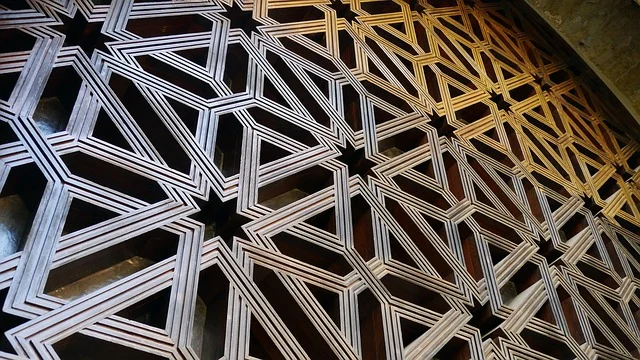
or: Hijri age ≈ Gregorian age × 1.0307
The number 354.367 comes from the traditional 30-year cycle of the tabular Islamic calendar: 30 Hijri years contain 10,631 days (19 years of 354 days and 11 leap years of 355 days), and 10,631 ÷ 30 = 354.367.
Worked example. A person born on 15 May 1990 lived 13,305 days by 18 October 2026. Dividing by 365.2425 gives 36.4 Gregorian years. Dividing by 354.367 gives 37.5 Hijri years. Their Hijri birth date is 20 Shawwal 1410 AH. 18 October 2026 is 7 Jumada al-Ula 1448 AH. So, they are 37 full years old when calculating age in Hijri years. Their passport says 36. You can count your own days with the days-old calculator.
How the Hijri calendar works
The calendar counts years from the Hijra, the migration of the Prophet Muhammad from Makkah to Madinah in 622 CE. Year 1 AH (Anno Hegirae, “in the year of the Hijra”) began in that year. About seventeen years later, the second caliph, Umar ibn al-Khattab, put the calendar into official use. The twelve months are:

- Muharram
- Safar
- Rabi al-Awwal
- Rabi al-Thani
- Jumada al-Ula
- Jumada al-Thani
- Rajab
- Shaban
- Ramadan
- Shawwal
- Dhu al-Qadah
- Dhu al-Hijjah
The Hijri date moves about 11 days earlier each year. This is because the calendar does not add leap months. As a result, Ramadan comes in summer for some years and in winter for others. It takes about 33 years to move all the way around the seasons. For example, Islamic New Year (1 Muharram) 1448 AH fell on 16 June 2026. This date is in the Umm al-Qura calendar. You can expect 1 Muharram 1449 around 6 June 2027. The tool can also calculate age in Hijri years.
Calculated calendar or moon sighting?
There are two ways to decide when a Hijri month begins, and they can disagree by a day:

- Calculated calendars. Saudi Arabia’s Umm al-Qura calendar is worked out in advance from astronomical data. This makes it possible to convert any date precisely. Most phones and computers, including the calculator on this page, use this calendar.
- Local moon sighting. Many countries, including Pakistan, India, Bangladesh and Morocco, begin each month when they actually see the new crescent. In Pakistan the Central Ruet-e-Hilal Committee announces the start of Ramadan and the Eids. A month can therefore begin a day later than in Saudi Arabia.
For your age in whole years this almost never matters. It only changes the result if your birthday falls on the first or last day of a Hijri month. If you need your exact Hijri birth date for an official purpose, check it against the calendar used where you were born.
When Hijri age is used
- Religious obligations. Islamic law counts years in lunar years. For example, zakat becomes due after wealth above the nisab has been held for a full lunar year (the hawl). Classical rulings that mention an age count it in Hijri years. For any personal ruling, ask a qualified scholar.
- Official documents. Saudi Arabia and several other countries have used Hijri dates on identity documents and in government services, so people sometimes need to convert a date of birth in either direction.
- Birthdays and milestones. Some families like to mark Hijri birthdays. They also notice that a child reaches a round number in Hijri years a few months earlier.
- Genealogy and history. Old records, waqf documents and gravestones in the Muslim world are often dated in the Hijri calendar.
Converting a date by hand
For a rough conversion of a year without a calculator, two shortcuts are handy:
Gregorian year ≈ Hijri year × 0.9702 + 622
For 2026: (2026 − 622) × 1.0307 = 1447.1, and indeed most of 2026 falls in 1447 or 1448 AH. These shortcuts can be a year out near the start of a Hijri year; for exact dates, use the calculator above.
Other ways of counting age
The Hijri calendar is not the only system that gives a different number from your legal age. Traditional East Asian age counting starts at one at birth. It adds a year at the new year, so it can be up to two years higher; read more in our guide to Korean age and other age systems. For everyday purposes in most countries, your legal age is the one in the Gregorian calendar. The age calculator works it out to the day.
Frequently asked questions
How many Hijri years old am I?
Divide the number of days you have lived by 354.367, or multiply your Gregorian age by about 1.0307. For an exact answer in years, months and days, use the Hijri age calculator at the top of this page.
Why is my Islamic age more than my real age?
Both are real ages counted in different calendars. A Hijri year is about 11 days shorter than a Gregorian year, so more Hijri years fit into the same lifetime: about one extra year for every 33 Gregorian years.
How many days are in a Hijri year?
A Hijri year has 354 or 355 days. Months alternate between 29 and 30 days according to the moon, and over a 30-year cycle the average is 354.367 days.
Is Hijri age used for zakat?
Yes. Zakat is due once you have held wealth above the nisab for one full lunar (Hijri) year. Therefore, ask a qualified scholar about your own situation.
What is my date of birth in the Hijri calendar?
Enter your Gregorian date of birth in the calculator above. It shows your Hijri date of birth in the Umm al-Qura calendar. However, in countries that begin months by moon sighting, the local date may be one day different.
Sources
- R. H. van Gent, Utrecht University: Origin and mathematics of the 30-year cycle of the tabular Islamic calendar
- R. H. van Gent, Utrecht University: The Umm al-Qura calendar of Saudi Arabia
- Wikipedia: Muharram (dates of 1 Muharram 1447–1449 AH)
- U.S. Naval Observatory: Leap years and the length of the Gregorian year

Yasir Hafeez is the founder and editor of ItsAgeCalculator. He builds the calculators, writes and checks the guides and articles, and tests every result against fixed date rules. He also runs OmniMatrics, a site of everyday calculators and converters.