

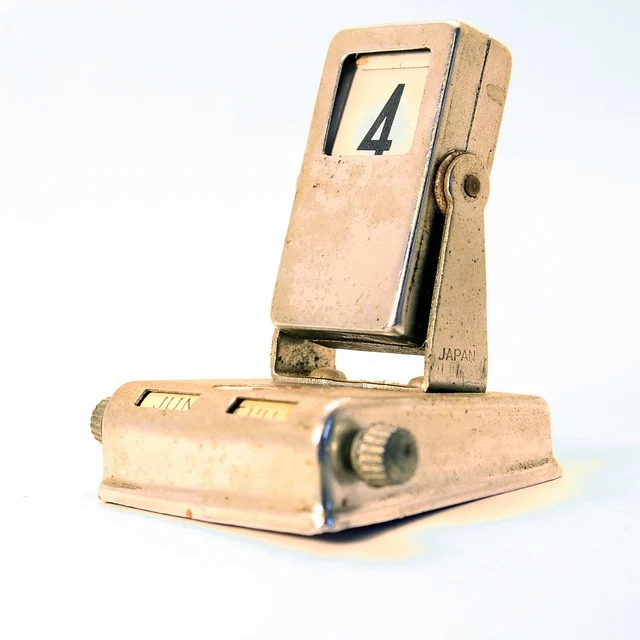
Photo: hudsoncrafted / Pixabay
How the weekday is found
The calculator uses the Gregorian calendar, which the US, the UK and almost every country use for civil dates. It counts the exact number of days from a known reference date and takes the remainder after dividing by 7. Because the Gregorian calendar repeats exactly every 400 years (146,097 days, a whole number of weeks), the method works for any year.

When will my birthday be on the same weekday again?
A birthday moves forward one weekday each year and two after a leap day, so it returns to the same weekday after 5, 6 or 11 years. The calculator finds the next year this happens for you.
The old rhyme
“Monday’s child is fair of face, Tuesday’s child is full of grace…” — the traditional English nursery rhyme, first printed in the 1830s, gives each weekday a fortune. It’s folklore, but the result box shows your line for fun.
How to Use the Calculator
Finding the day of the week you were born is simple. The online tool quickly processes your input. It provides an immediate and accurate result. Follow these straightforward steps to get your answer. This ensures you use the calculator correctly. Also, it works for any date using the Gregorian calendar rules.
- First, locate the input field labeled 'Date of birth'. This is where you will enter your birth date. The field is prominent on the page.
- Next, type your full birth date into the designated field. Use the format requested by the calculator. Typically, this is day, month, and year. For example, '15 May 1990' or '05/15/1990'.
- Then, confirm the date you entered is accurate. Even a small error changes the result. Double-check the day, month, and year.
- Finally, click the 'Calculate' or 'Find Day' button. This button is usually located near the input field. The calculator will then process your request instantly.
Worked Example: Finding a Birth Weekday
Let's walk through an example. Suppose you want to find the day of the week for a specific historical date. First, we will use a known date to demonstrate the process. This helps confirm the calculator's function. The example shows every step clearly. As a result, it ensures you understand how to use the tool effectively.
Consider the date 20 July 1969. This was the date of the Apollo 11 moon landing. We want to determine its weekday. The calculator uses a consistent method. Also, it applies the Gregorian calendar for all calculations. This makes the process reliable for many dates.
Input '20 July 1969' into the date field. Next, press the calculate button. The result shown will be 'Sunday'. This matches historical records. The calculator correctly identifies the day. So, you can use this method for your own birth date. It applies the same logic for What day of the week was I born?
Common Mistakes and How to Avoid Them
Users sometimes make small errors. These can lead to incorrect results. Knowing common pitfalls helps you get the right answer. Avoid these mistakes for accurate weekday calculations. For example, pay close attention to date entry. It is the most frequent source of error.
A common mistake is incorrect date format. For example, some calculators require MM/DD/YYYY. Others need DD/MM/YYYY or YYYY-MM-DD. Always check the expected format. Enter your date exactly as requested. This prevents misinterpretation.
Another error is mistyping the year. For instance, entering '1998' instead of '1988'. Such a small change drastically alters the weekday. Always double-check all four digits of the year. Verify the month and day too. Accuracy is key for correct results.
Finally, ensure you are using the correct calendar. This calculator uses the Gregorian calendar. For dates before its widespread adoption, results might differ from historical local records. However, for modern birth dates, this is the standard. It provides a consistent reference.
When a Different Approach is Needed
This calculator uses the proleptic Gregorian calendar for all dates. This is the standard for modern births. However, for very old dates, a different approach might be necessary. Some historical records use the Julian calendar. This calendar was common before 1582. It has different leap year rules.
If researching a historical event, its local date might use the Julian calendar. For example, dates in England before 1752 followed the Julian calendar. So, a date like '10 January 1650' might have a different weekday historically. Always consider the calendar system in use at that specific time and place. This ensures accurate historical research.
Practical Tips for Using Date Calculators
Always ensure your device's date and time settings are correct. While this calculator does not use your local time, consistent settings prevent other potential issues. A stable internet connection also helps. It ensures the page loads fully and correctly. This provides a smooth user experience.
Bookmark this page for quick access. If you frequently need to find what day of the week was I born, a bookmark saves time. Share the tool with friends and family. It is a fun way to learn about their birth weekdays. Also, explore other related age tools. They offer more interesting insights about dates.
Frequently asked questions
What day was I born if I was born on 1 January 2000?
A Saturday.
Does the calculator use the Julian calendar for old dates?
No. However, it uses the Gregorian calendar for every date, which is correct for births from 1900 onward in every country that uses it today.
How often does my birthday fall on the same weekday?
Every 5, 6 or 11 years, depending on where the leap days fall.
Sources