In this article
Chinese New Year 2027 falls on Saturday 6 February 2027, starting the Year of the Goat (also called the Sheep or Ram). The current Year of the Horse began on 17 February 2026. A countdown below shows how many days are left, and the table lists the dates to 2030.
Countdown to Chinese New Year
Chinese New Year dates, 2026 to 2030
| Year | New Year’s Day | Zodiac animal |
|---|---|---|
| 2026 | Tuesday 17 February | Horse 🐎 |
| 2027 | Saturday 6 February | Goat 🐐 |
| 2028 | Wednesday 26 January | Monkey 🐒 |
| 2029 | Tuesday 13 February | Rooster 🐓 |
| 2030 | Sunday 3 February | Dog 🐕 |
The celebrations start on New Year’s Eve with the family reunion dinner. These traditionally last 15 days, ending with the Lantern Festival on the 15th day of the first month — 20 February 2027.
The Lantern Festival: A Grand Finale
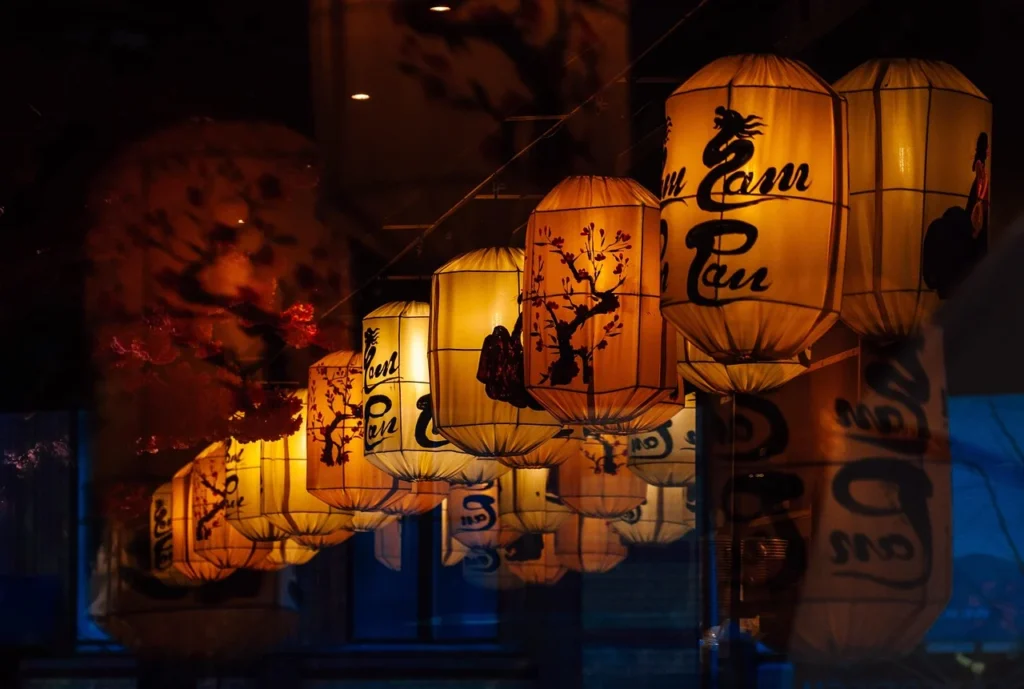
Next, the Lantern Festival, known as Yuan Xiao Jie (元宵节), marks the official end of the Chinese New Year celebrations. It falls on the first full moon of the new lunar year. On this day, people light and display decorative lanterns, often adorned with riddles. Families eat tangyuan (汤圆), sweet glutinous rice balls that symbolize reunion and completeness. You also see dragon and lion dances, and sometimes fireworks, bringing the festive period to a joyful close.
Why the date changes every year
Chinese New Year follows the traditional Chinese calendar. This calendar is lunisolar: months follow the moon, but we add an extra month about every three years to keep the calendar in step with the sun. Each month begins on the day of the new moon, as seen from Beijing time (UTC+8).
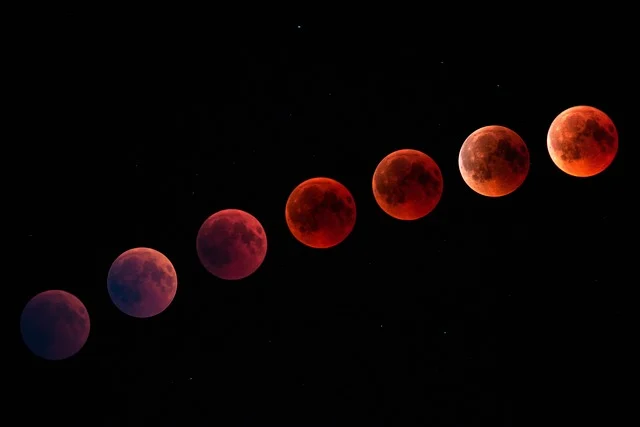
New Year’s Day is normally the second new moon after the winter solstice. So, it always lands between 21 January and 20 February. The 2027 date shows how precise the rule is. The new moon falls at 15:56 UTC on 6 February 2027 — which is 23:56, four minutes before midnight, in Beijing. Because Beijing time decides, the new year starts on 6 February. This happens even though in most of the Americas and Europe the new moon falls on the same day too. Some calendar software that calculates the moon slightly differently shows 7 February; official Chinese sources give 6 February.
Understanding the Lunisolar Calendar
The Chinese calendar balances lunar cycles with the solar year. A lunar month is about 29.5 days long. Twelve lunar months make a lunar year of roughly 354 days. This is about 11 days shorter than a solar year (365.25 days). If the calendar only followed the moon, holidays like Chinese New Year would drift significantly through the seasons. They would eventually fall in summer or autumn.
To prevent this drift, the Chinese calendar adds an extra, or “intercalary,” month (闰月, rùnyuè) approximately every three years. This brings the lunar calendar back into alignment with the solar year. It ensures that seasonal festivals occur at roughly the same time each year. This system is complex. It relies on the positions of the sun and moon and the 24 solar terms to determine when to insert the leap month.
The Winter Solstice Rule Explained
The “second new moon after the winter solstice” rule is key to fixing Chinese New Year within the Gregorian calendar. The winter solstice is the shortest day of the year, usually around December 21 or 22. This event anchors the start of the new lunar year relative to the Earth’s orbit around the sun. For example:
- If a new moon occurs very early after the winter solstice, the next new moon will be the first new moon of the new year. The *second* new moon after the solstice then becomes Chinese New Year.
- If a new moon occurs very late after the winter solstice, the *next* new moon might be the second one. This pushes the New Year date later.
This rule ensures Chinese New Year always falls within the 31-day window of January 21 to February 20, keeping it consistently in late winter or early spring.
Why Beijing Time Matters for the Date
The precise moment of the new moon can vary globally. Chinese calendar calculations standardize this by using Beijing time (UTC+8). If the new moon occurs at 11:59 PM on February 6 in Beijing, then February 6 is New Year’s Day. If it occurs at 12:01 AM on February 7 in Beijing, then February 7 is New Year’s Day. This small difference can mean a full day’s shift, especially for people in time zones far from China. This is why you might see different dates proposed by non-official sources, but official Chinese calendars adhere strictly to Beijing’s calculation.
The Year of the Goat
The 12 zodiac animals come in a fixed order: Rat, Ox, Tiger, Rabbit, Dragon, Snake, Horse, Goat, Monkey, Rooster, Dog, and Pig. Each year also has one of five elements. The full cycle lasts 60 years. Fire Goat year (丁未, dīng wèi) is for Chinese New Year 2027. Earlier Goat years were 2015, 2003, 1991, 1979, and 1967.
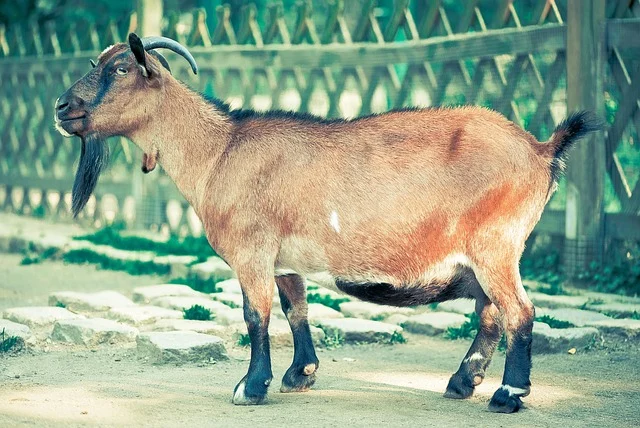
If you were born in January or early February, your zodiac animal may be the one of the previous year. This is because the animal changes at Chinese New Year, not on 1 January. Someone born on 1 February 2027 is a Horse. Someone born on 7 February 2027 is a Goat. The Chinese zodiac calculator checks the exact date for you.
The Five Elements and Their Influence
The Chinese zodiac has five elements: Wood, Fire, Earth, Metal, and Water. These are beyond the 12 animals. Each element links to two consecutive years. This means a 10-year cycle. Combining 12 animals with 5 elements makes a 60-year cycle. For example, the Fire Goat year will be for Chinese New Year 2027. The last Fire Goat year was in 1967. This elemental influence adds meaning to each zodiac sign. It affects personality traits and fortune.
- Wood: Associated with growth, creativity, and generosity.
- Fire: Linked to passion, energy, and dynamism.
- Earth: Represents stability, practicality, and reliability.
- Metal: Symbolizes righteousness, determination, and resilience.
- Water: Connects to introspection, sensitivity, and adaptability.
Astrologers use the combination of animal and element to provide more detailed insights into a person’s character and their luck for the year.
The Goat: Traits and Compatibility
People born in the Year of the Goat (or Sheep/Ram) are traditionally seen as gentle, compassionate, and artistic. They often possess a strong sense of empathy and a love for beauty. Goats tend to be calm and considerate, preferring peace and harmony. They can also be shy, sensitive, and sometimes indecisive.
In terms of compatibility, Goats generally get along well with Rabbits, Horses, and Pigs, sharing similar values and temperaments. They may find challenges with Oxen, Dogs, and Tigers, where differences in personality can lead to friction.
How Chinese New Year is celebrated
- Cleaning before the new year to sweep away bad luck — but not on New Year’s Day itself, so good luck isn’t swept out.
- Reunion dinner on New Year’s Eve, often with dumplings in northern China and fish, whose name sounds like “surplus”.
- Red envelopes (hóngbāo) with money for children and unmarried relatives — now often sent digitally.
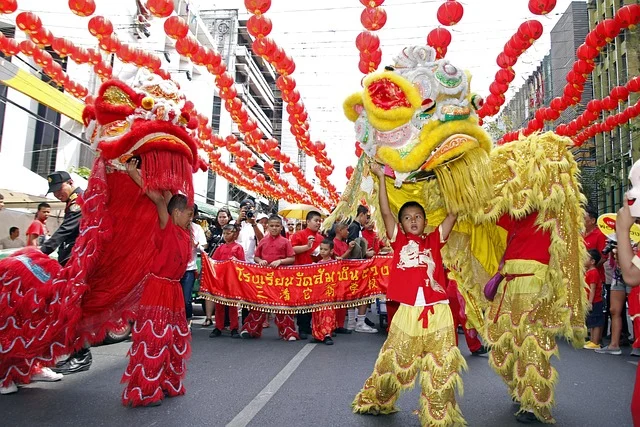
- Firecrackers, lion dances and red decorations to scare off the mythical beast Nian.
- Visiting family and friends in the first days of the year.
The holiday causes the world’s largest yearly human migration, the chūnyùn travel rush. Hundreds of millions of people travel home. In mainland China, the official public holiday usually lasts eight or nine days. Korea (Seollal), Vietnam (Tết), Singapore, Malaysia and Indonesia also have public holidays. Celebrations are held in Chinatowns worldwide.
Deeper Look into Key Traditions
The Reunion Dinner (Nian Ye Fan)
The reunion dinner on New Year’s Eve is the most important meal of the year. Families gather, often travelling long distances, to share a lavish feast. They choose dishes not just for taste but for their symbolic meanings. Fish (鱼, yú) is essential. Its pronunciation is similar to “surplus” or “abundance,” symbolizing a wish for prosperity in the coming year. Dumplings (饺子, jiǎozi) in northern China resemble ancient gold ingots, signifying wealth. Spring rolls (春卷, chūnjuǎn) represent wealth and new beginnings. Glutinous rice cake (年糕, niángāo) means “getting higher year by year,” wishing for improvements in life or career.
Red Envelopes (Hongbao)
Red envelopes, or hóngbāo, contain money. People give them primarily to children and unmarried younger relatives. The red color symbolizes good luck and wards off evil spirits. The money inside is a wish for prosperity and good fortune. In modern times, people send digital red envelopes via apps like WeChat Pay. They have become increasingly popular, especially among younger generations and for friends or colleagues. This tradition extends beyond family, as employees may also receive hóngbāo from their employers.
Decorations and Superstitions
Red is the dominant color during Chinese New Year, symbolizing good luck, happiness, and prosperity. You see red lanterns and couplets (春联, chūnlián) with auspicious phrases pasted on doorframes. Paper-cuts also appear on windows. People believe these decorations attract good fortune and protect against negative influences. Firecrackers and fireworks, along with lion and dragon dances, scare away the mythical beast Nian. This ensures a peaceful and prosperous new year. You must sweep and clean before New Year’s Day to “sweep away the old.” However, you should avoid cleaning on New Year’s Day itself to prevent sweeping away good luck.
Chinese age and the new year
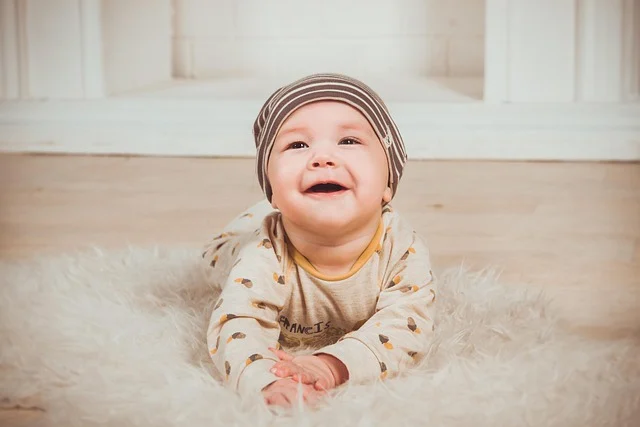
In the traditional Chinese age system (虚岁, xūsuì), a baby is 1 at birth. Everyone gets a year older at Chinese New Year, not on their birthday. A baby born a few days before the new year can therefore be “2” after less than a week. Official ages in China use the international system. However, families still use the traditional count for some customs. The Chinese age calculator shows both.
Traditional Chinese Age (Xusui) vs. Western Age
The traditional Chinese age system, xūsuì, counts age differently from the Western system. At birth, we consider a baby one year old. Then, on each subsequent Chinese New Year, everyone adds another year to their age, regardless of their actual birth date. This means a child born in December could be “two” years old just a few weeks later. This happens when Chinese New Year arrives in January or February.
For example, if a child is born on December 1, 2026, they are considered 1 xūsuì. When Chinese New Year 2027 arrives on February 6, 2027, this child becomes 2 xūsuì. This occurs even though they are only a little over two months old by Western reckoning. This system reflects an older cultural understanding of life stages and the passage of time. While official documents and modern usage in China primarily use the Western age system, xūsuì remains important for family traditions, cultural practices, and sometimes for determining seniority within a family.
Zodiac animals of recent years
Because the animal changes at Chinese New Year, people born in January or early February should check the exact start date:
| Year | New year began | Animal |
|---|---|---|
| 2015 | 19 February | Goat |
| 2016 | 8 February | Monkey |
| 2017 | 28 January | Rooster |
| 2018 | 16 February | Dog |
| 2019 | 5 February | Pig |
| 2020 | 25 January | Rat |
| 2021 | 12 February | Ox |
| 2022 | 1 February | Tiger |
| 2023 | 22 January | Rabbit |
| 2024 | 10 February | Dragon |
| 2025 | 29 January | Snake |
So a baby born on 20 January 2023 is a Tiger, not a Rabbit. For any date of birth, the Chinese zodiac calculator does the check automatically.
Frequently asked questions
When is Chinese New Year 2027?
Saturday 6 February 2027. New Year’s Eve, with the reunion dinner, is Friday 5 February.
What animal is 2027?
The Goat (also translated Sheep or Ram), with the Fire element.
Why is Chinese New Year on a different date each year?
It follows the lunisolar Chinese calendar. The date is typically the second new moon after the winter solstice, falling between January 21 and February 20, as determined by Beijing time.
When is Chinese New Year 2028?
Wednesday 26 January 2028, starting the Year of the Monkey.
How long do Chinese New Year celebrations last?
Traditionally, celebrations last for 15 days, starting on New Year’s Eve and concluding with the Lantern Festival on the 15th day of the first lunar month.
Sources
- ChinaTravel: Chinese New Year dates 2027–2030 and zodiac animals
- Astronomy Engine: new-moon time for 6 February 2027 (open-source astronomy library)

Yasir Hafeez is the founder and editor of ItsAgeCalculator. He builds the calculators, writes and checks the guides and articles, and tests every result against fixed date rules. He also runs OmniMatrics, a site of everyday calculators and converters.