In this article
If you adopt a dog without papers, you can learn how to tell a dog’s age. Estimate it from its teeth, eyes, coat, muscles, and energy. This works very accurately for puppies. It is rougher for adults. A puppy has all 28 puppy teeth by about 8 weeks. All 42 adult teeth arrive by about 7–8 months. After that, a vet gives an educated guess. It’s usually within a couple of years. Convert your estimate to human years below.
Knowing your dog’s age helps you provide the right care. It guides decisions about nutrition, exercise, training, and preventative health screenings. For rescue dogs or strays, an age estimate from a vet ensures you can set an appropriate birthdate for records, which is crucial for vaccinations, insurance, and understanding their life stage needs.
Dog age in human years
Puppies: age by teeth
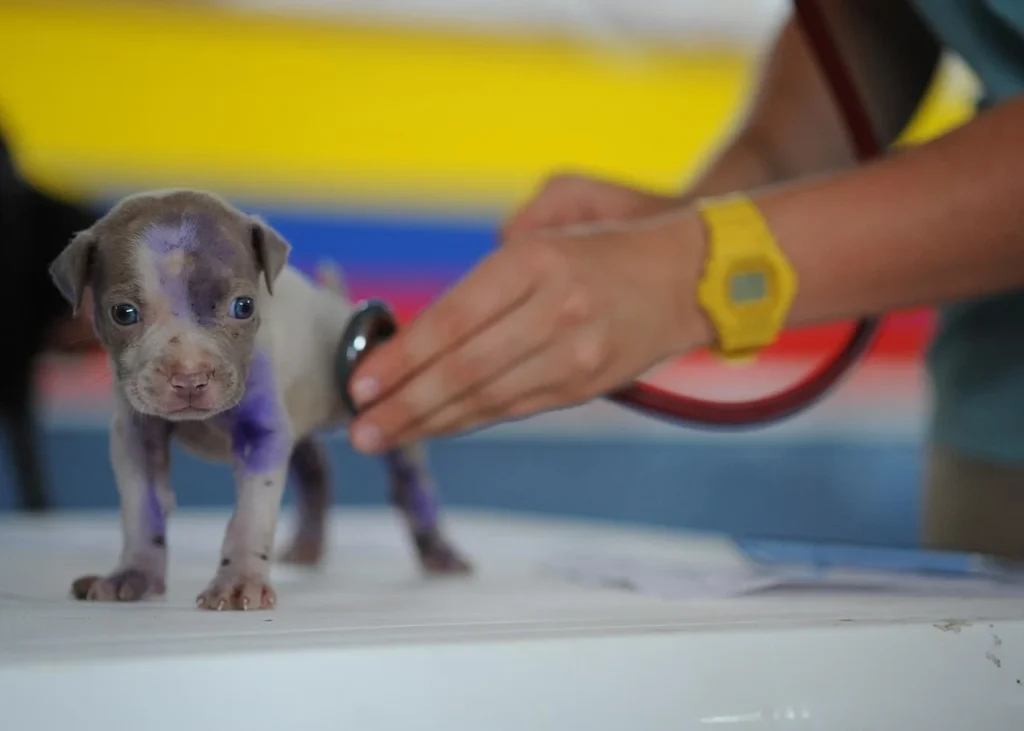
Puppy teeth come in on a reliable schedule, which is why shelters and vets use them to age young dogs. This method offers high accuracy for puppies under 8 months. You can often estimate a puppy’s age within a week or two based on which teeth you see.
How to check a puppy’s teeth
To safely examine a puppy’s mouth, follow these steps:
- Ensure the puppy is calm: Choose a quiet time when the puppy is relaxed. You may need a helper to gently hold the puppy.
- Approach gently: Talk softly and pet the puppy’s head and muzzle.
- Lift the lips: Carefully lift the upper and lower lips to expose the gums and teeth. Avoid forcing the mouth open at first.
- Inspect the front teeth (incisors): Look at the small teeth at the very front of the mouth. Also note their number and whether they are sharp puppy teeth or larger adult teeth.
- Check the canines: These are the longer, pointed “fang” teeth. Observe if they are present and their size.
- Examine premolars and molars: Gently open the mouth a little wider to see the teeth further back. You will need to be quick and gentle.
- Note color and wear: Puppy teeth are typically very white and sharp. However, adult teeth are larger, blunter, and may have a slightly off-white color.
This table follows the US Department of Agriculture’s guide to aging puppies by their teeth:

| Age | Teeth you can see |
|---|---|
| Under 2 weeks | No teeth |
| 2–3 weeks | About 8 puppy teeth coming in (often incisors and canines) |
| 3–4 weeks | About 12 puppy teeth (more incisors and canines) |
| 4–6 weeks | About 20–24 puppy teeth (incisors, canines, and premolars) |
| 6–8 weeks | All 28 puppy (deciduous) teeth are present |
| 2–4 months | Adult incisors start replacing puppy incisors |
| 4–6 months | Adult canines, premolars and first molars coming in |
| 6–8 months | All 42 adult teeth are present |
A puppy under 8 weeks has fewer than 28 teeth. It has no adult teeth. This is too young for sale in many places. A young dog with puppy teeth is under 6 months. Puppy teeth are small, sharp, and very white. Adult teeth are larger and blunter. These are good ‘how to tell a dog’s age’ tips.
Common problems with puppy teeth
Some puppies keep a baby tooth. This often happens after the adult tooth arrives. Most often, it is a canine tooth. These retained teeth can trap food. They also crowd adult teeth. This leads to dental disease or misalignment. If you notice a double tooth, ask your vet. This means both puppy and adult teeth are in one spot. Your vet may recommend extraction. This prevents future problems. This issue is common in small breeds. It is one way of how to tell a dog’s age and health.
Adult dogs: clues from the teeth
After a year, teeth offer rough clues for how to tell a dog’s age. Dental health depends on diet, chewing, breed, and care. So, a dog with good hygiene looks younger. Poor care or chewing hard objects makes a dog look older.
How to check an adult dog’s teeth
Checking an adult dog’s teeth for age clues requires a similar approach to puppies, but you will focus on different indicators:
- Observe overall condition: Note the general cleanliness, presence of plaque or tartar, and any signs of gum inflammation.
- Examine the incisors: Look at the small front teeth. Older dogs show more wear on these teeth, and the small bumps on their surfaces (called mammelons) may wear down over time.
- Check for tartar build-up: Tartar often accumulates on the outer surfaces of the upper molars and premolars first. Yellowing and brown deposits indicate tartar.
- Assess gum health: Healthy gums are pink and firm. Red, swollen, or bleeding gums suggest gum disease, which is more common in older dogs.
- Look for missing or loose teeth: Advanced age and severe dental disease can lead to tooth loss or loosening.
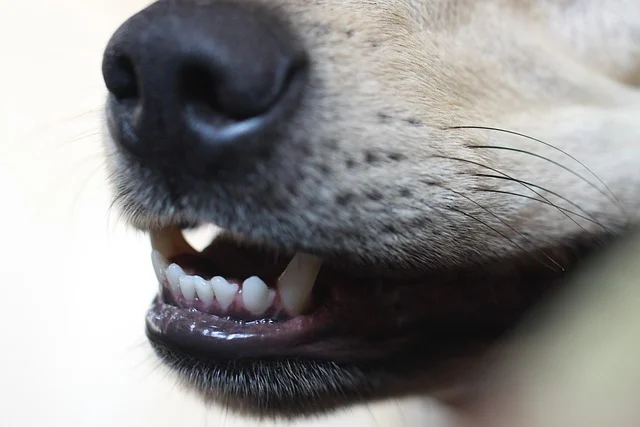
- About 1–2 years: teeth white and clean, with little or no tartar; the small bumps on the front incisors may begin to wear.
- About 3–5 years: some yellowing and tartar, especially on the back teeth; incisors more worn. You may notice mild gum recession.
- About 5–10 years: more tartar and wear; gum disease common without dental care. Also, teeth may appear duller, and some staining might be present.
- Over 10 years: heavy wear, loose or missing teeth are common. Significant tartar build-up, severe gum recession, and bad breath are often present.
A dog with excellent dental care can look years younger; a dog that chews stones can look older. Genetics also play a role; some breeds are more prone to dental issues than others.
Other signs of age
Teeth give the best clues for younger dogs. Other signs help refine your estimate. This is especially true for adult and senior dogs. These clues are less precise alone. They become more reliable when combined. This is how to tell a dog’s age.
- Eyes: A bluish-grey haze in the lenses, called nuclear sclerosis, is normal in middle-aged and older dogs and usually starts from around 6–8 years. It does not affect sight much, unlike cataracts, which look whiter and denser — a vet can tell the difference. Nuclear sclerosis is a natural aging change, while cataracts can be vision-impairing and require different management.
- Coat: Grey hairs around the muzzle and eyes often appear in middle age, but some dogs go grey early due to stress, genetics, or even certain medical conditions, so this is a weak clue. Some breeds are also predisposed to early greying.
- Body: Young adult dogs have firm muscle and a lean shape. As dogs age, they lose muscle mass, especially over the back legs and spine, and may carry more fat around the belly. You might notice a subtle sway in their back or a less athletic posture. Joints may also appear thicker due to arthritis.
- Movement and energy: Stiffness after rest, slower stairs, reluctance to jump, and longer sleep suggest an older dog. Puppies and young adults are typically bursting with energy, while senior dogs prefer shorter walks and more naps. Watch for changes in gait, like a hesitant step or difficulty rising.
- Bones: In a young dog, an X-ray shows whether the growth plates have closed, which happens at around a year in small breeds and later — up to about 18 months or more — in giant breeds. This is a definitive way to confirm if a dog is still growing. A vet can use X-rays to assess bone density and look for signs of arthritis, which are common in older dogs.
- Hearing: While not a primary indicator, gradual hearing loss can occur with age. You might notice your dog is less responsive to sounds or needs louder commands.
Life stages
The American Animal Hospital Association (AAHA) offers veterinary guidelines. They describe dog life stages. These stages consider development and expected lifespan. However, they do not use fixed ages. Dogs age at varying rates. This depends on their size and breed. Understanding how to tell a dog’s age helps. You can tailor care to specific needs.
- Puppy: From birth until sexual maturity, typically about 6–9 months. This stage is characterized by rapid growth, learning, and the development of social skills.
- Young Adult: From sexual maturity until fully mature, usually around 3–4 years. During this stage, dogs reach their full physical size and mental maturity.
- Mature Adult: From full maturity through the middle part of their life. Dogs in this stage are typically at their peak physical condition, though subtle signs of aging may begin to appear.
- Senior: This stage begins during the last quarter of the dog’s expected lifespan. Because big dogs live shorter lives, a Great Dane can be senior at 6 while a small terrier is not senior until 10 or later. Senior dogs often require more frequent vet visits, specialized diets, and monitoring for age-related conditions.
See how long do dogs live for life expectancy by breed size.

From dog years to human years
The old rule of “7 dog years per human year” is a myth. Dogs grow up much faster at first. A common veterinary rule of thumb for how to tell a dog’s age states this. A medium-sized dog is about 15 human years at its first birthday. It is about 24 at two. Then it ages roughly 4–5 human years a year. Larger dogs age faster. This initial rapid aging means a 1-year-old dog is past its adolescence. The aging rate then slows and becomes more linear.
The calculator above uses size-adjusted values; the dog age calculator page explains the method. Factors like breed, size, and even neuter status can influence a dog’s lifespan and, therefore, its equivalent human age.

Getting a vet’s estimate
You can guess a dog’s age with clues. Vets give the most accurate estimate. However, clues are less precise for adult dogs. Register an adopted dog with a vet. A vet combines teeth, eyes, and body. They may use X-rays for how to tell a dog’s age. Vets consider all evidence. This includes any history you have. They form a comprehensive picture.
Ask for a birth date. Use 1 January of the estimated year. This aids vaccination and insurance records. The date becomes official for your dog. Insurance companies set age limits. They adjust premiums by age. An estimate a year off matters. As a result, it impacts coverage and costs.
A vet can also identify any underlying health issues that might mimic signs of aging, ensuring your dog receives appropriate care from the start.

When a vet’s estimate is most crucial
A vet’s professional assessment is particularly important in these situations:
- Adopting a rescue dog or stray: These dogs often come with no known history, making a vet’s estimate vital for establishing their age for medical records.
- Insurance purposes: As mentioned, age affects policy eligibility and premiums.
- Breeding programs: For purebred dogs without clear birth records, a vet’s estimate can help determine maturity.
- Managing health: Knowing an approximate age helps your vet recommend age-appropriate screenings and preventative care, such as joint supplements for older dogs or specific vaccinations for puppies.
Frequently asked questions
How can I tell how old my puppy is?
Count its teeth: all 28 puppy teeth by about 8 weeks, adult teeth replacing them from about 3–4 months, and all 42 adult teeth by 7–8 months. You can also examine its energy levels and body development.
Can a vet tell a dog’s exact age?
For puppies, a vet can often estimate within weeks. However, for adult dogs, it is usually an estimate, often within one to three years, as dental wear and other physical signs vary greatly among individuals.
Do grey hairs mean a dog is old?
Not always. Many dogs grey in middle age, and some go grey young due to genetics, stress, or other factors. It is a weak indicator on its own.
How many teeth does an adult dog have?
An adult dog typically has 42 permanent teeth: 12 incisors, 4 canines, 16 premolars, and 10 molars.
What is nuclear sclerosis in dogs?
Nuclear sclerosis is a normal, age-related bluish-grey haze in the lenses of middle-aged and older dogs, usually starting around 6-8 years. It causes minimal vision impairment and is different from cataracts, which are whiter and denser and can significantly affect sight.
Sources

Yasir Hafeez is the founder and editor of ItsAgeCalculator. He builds the calculators, writes and checks the guides and articles, and tests every result against fixed date rules. He also runs OmniMatrics, a site of everyday calculators and converters.