In this article
Holi 2027 is on Monday 22 March, the day of colours. Holika Dahan, the bonfire night, is on the evening of Sunday 21 March 2027. Holi is expected on 11 March in 2028. This article provides a comprehensive guide to understanding Holi, its traditions, and how we determine its date each year. The countdown shows how many days are left.
Countdown to Holi
Holi Dates and Calendar Details
| Year | Holika Dahan (evening) | Holi (colours) |
|---|---|---|
| 2027 | Sunday 21 March | Monday 22 March |
| 2028 | Friday 10 March | Saturday 11 March (some calendars give 10 March) |
| 2029 | Wednesday 28 February | Thursday 1 March |
| 2030 | Monday 18 March | Tuesday 19 March |
Dates are for India (New Delhi). Panchang (Hindu almanac) makers publish Holi dates each year. Different regional calendars occasionally disagree by a day. This discrepancy often arises due to varying local sunrise and sunset times. It also arises from different traditional rules for calculating the start and end of a tithi (lunar day). Always consult your local temple or government holiday lists for the final word on the exact date in your specific region.
Understanding the Panchang
A Panchang is a traditional Hindu calendar and almanac. The word ‘Panchang’ literally means “five limbs” (pancha – five, anga – limbs). It refers to the five elements it tracks: Tithi (lunar day), Vaara (weekday), Nakshatra (star constellation), Yoga (auspicious time), and Karana (half lunar day). These elements are crucial for determining auspicious times (muhurats) for festivals, ceremonies, and daily activities. Panchangs are vital for Hindu cultural and religious life. They provide timings that govern everything from planting crops to celebrating major festivals like Holi.
Why Holi Changes Every Year
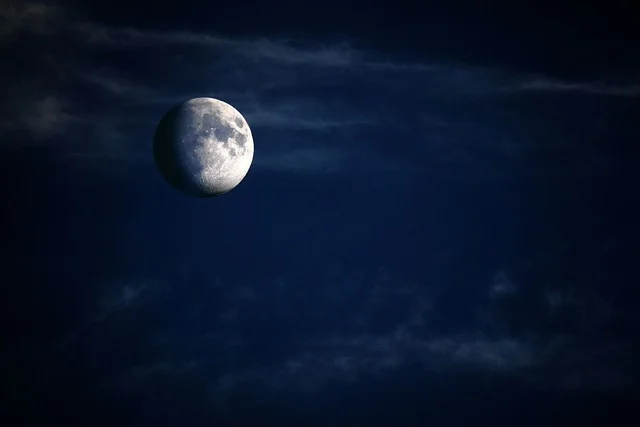
Holi follows the Hindu lunar calendar, not the solar Gregorian calendar. We celebrate it at the full moon (Purnima) of the month of Phalguna. This is the last month of the Hindu lunar year. This period typically falls in late February or March according to the Gregorian calendar.
The Lunar Calendar and Tithi
The Hindu lunar calendar is based on the cycles of the moon. Each month begins on the new moon or full moon, depending on the tradition. A tithi is a lunar day. It is the time it takes for the longitudinal angle between the sun and moon to increase by 12 degrees. The moon’s orbit is elliptical, so tithis vary in length. They range from about 19 to 26 hours. This variation means that a tithi might start and end at any time of day. It does not necessarily start or end at sunrise or midnight.
The exact date of Holi depends on when the full-moon period — the Phalguna Purnima tithi — begins and ends. In 2027, Phalguna Purnima runs from approximately 6:21 pm on 21 March to 4:13 pm on 22 March, Indian Standard Time (IST). You traditionally perform Holika Dahan on the evening when Purnima is in force. This makes it the evening of 21 March. The main colour festival, Rangwali Holi, follows on the next day, 22 March. The astronomical full moon itself occurs at 4:14 pm IST on 22 March, aligning closely with the end of the Purnima tithi.
The Role of Adhik Maas (Intercalary Month)
The Hindu lunar year lasts about 354 days. This is 11 days shorter than the solar Gregorian year (365 days). This difference shifts festivals like Holi earlier each year. For example, the holi 2027 date is March 22, shifting to March 11 in 2028. An extra lunar month is added to prevent drift. This month, called an adhik maas, occurs roughly every three years. It syncs the lunar calendar with the solar year. This ensures Holi remains a spring celebration. Without adhik maas, Holi would lose its seasonal significance.
For example, if an adhik maas falls before Phalguna, Holi will occur later in the Gregorian calendar that year, effectively ‘resetting’ its movement. This mechanism keeps Hindu festivals tied to their appropriate seasons, even while following a lunar cycle.
Holika Dahan and Rangwali Holi: The Two Main Days
Holi is celebrated over two main days, each with distinct rituals and significance.
Holika Dahan: The Bonfire of Good Over Evil
Holika Dahan, also known as Choti Holi, is observed on the evening before Rangwali Holi. This night recalls the story of Prahlad, a devout follower of Lord Vishnu, and his demonic aunt Holika. Holika had a boon to be immune to fire. She tried to burn Prahlad by sitting with him in a pyre. However, through divine intervention, Prahlad emerged unharmed. Holika was consumed by the very fire she sought to wield. This story symbolizes the triumph of devotion and good over evil.
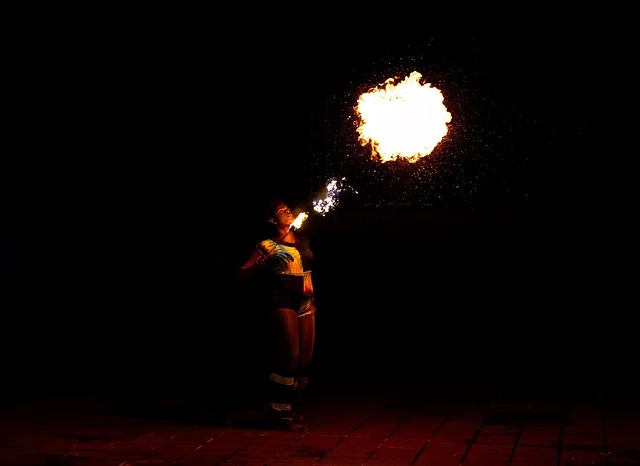
On this evening, communities light bonfires at an auspicious time (muhurat) after sunset. People gather around the fire. They perform a ritual circumambulation (parikrama) and offer grains, coconut, and other offerings to the flames. These offerings symbolize letting go of past negativities and welcoming prosperity. People consider the ashes from the Holika Dahan bonfire sacred. They often apply them to the body as a protective measure.
Rangwali Holi: The Festival of Colours and Joy
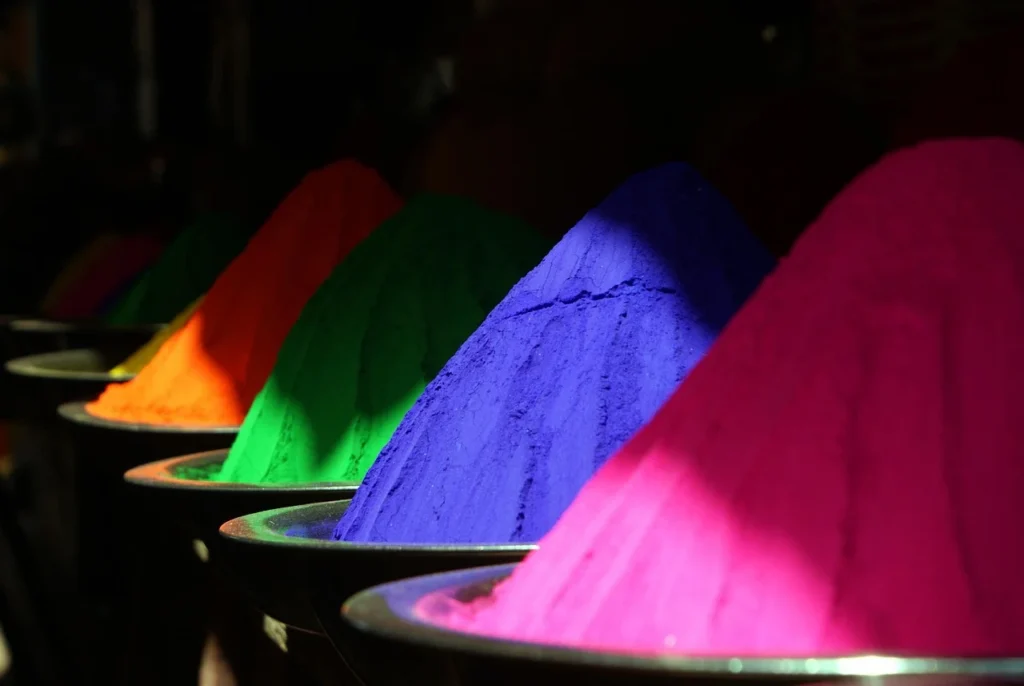
The next morning is Rangwali Holi (also called Dhulandi or Dhuleti), the vibrant festival of colours. People take to the streets, playfully throwing coloured powder (gulal) and coloured water on friends, family, and even strangers. This joyous celebration signifies the arrival of spring, the blossoming of new life, and the triumph of good over evil. It is a day for shedding inhibitions, fostering togetherness, and mending broken relationships.
Rangwali Holi is strongly associated with Lord Krishna and Radha, particularly in the Braj region around Mathura and Vrindavan. Legends describe Krishna playfully applying colour to Radha and the gopis (cowherd girls). This solidifies the festival’s connection to divine love and playful mischief. Beyond the colours, people visit friends and relatives. They share traditional sweets such as gujiya (sweet dumplings) and refreshing drinks like thandai (a milk-based beverage often infused with nuts and spices).
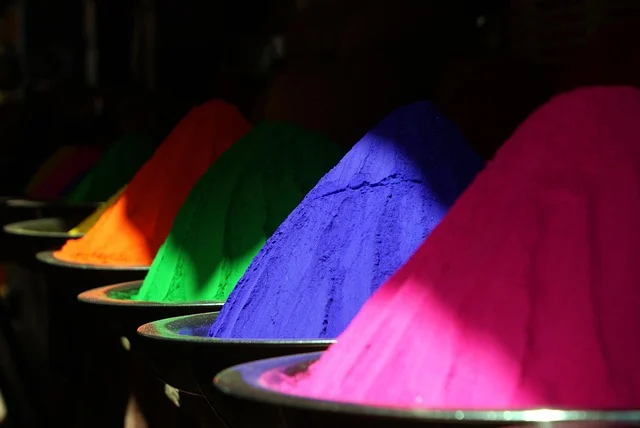
The throwing of colours is not just a game; it carries symbolic meaning. Different colours represent different aspects of life and emotion: red for love and fertility, green for new beginnings, yellow for piety, and blue for serenity. Participating in Rangwali Holi is a way to embrace these vibrant energies. It celebrates the diversity and joy of human connection.
Regional Celebrations and Variations of Holi
While the core essence of Holi remains consistent, its celebrations take on unique flavours across different regions.
- Braj (Mathura, Vrindavan, Barsana, Nandgaon) — Celebrations in this region, deeply connected to Lord Krishna’s life, last about a week. Highlights include Lathmar Holi in Barsana, held several days before the main Holi. Here, women playfully beat men with sticks (lathis) while men defend themselves with shields, reenacting a playful legend between Krishna and Radha. Other unique traditions include ‘Phoolon ki Holi’ (Holi with flowers) and ‘Laddu Holi’ (Holi with sweets).
- West Bengal and Odisha — Known as Dol Jatra or Dol Purnima, this festival often occurs on the same full moon as Holika Dahan. This is typically a day before Rangwali Holi elsewhere. Devotees adorn idols of Krishna and Radha and place them on swings (dola). They parade them in decorated palanquins, and devotees apply colours to them and each other.
- Punjab — The Sikh festival Hola Mohalla is held the day after Holi. Introduced by Guru Gobind Singh, this festival focuses on martial arts displays, mock battles, horse riding, and poetry, emphasizing bravery and community spirit, rather than just colours.
- Nepal — You celebrate Holi over two days, known as Fagu Purnima. People observe it a day earlier in the hills and Kathmandu than in the southern Terai region. This reflects geographical and cultural nuances. It is a major public holiday.
- Diaspora — Hindu communities worldwide, including in the UK, US, Canada, Mauritius, Fiji, Guyana, Trinidad and Tobago, celebrate Holi with immense enthusiasm. They often hold these events on the nearest weekend to accommodate work and school schedules. This ensures maximum participation. These celebrations often serve as important cultural touchstones. They connect generations to their heritage.
Safety Tips for a Joyful Holi
Holi is a festival of joy, but safety precautions ensure everyone has a pleasant experience.
- Choose Safe Colours: Always opt for natural, organic, or certified skin-safe colours. Cheap powders can contain industrial dyes, heavy metals, and chemicals that cause skin irritation, allergies, or eye damage. Look for labels indicating “herbal” or “natural” colours.
- Protect Your Skin and Hair: Before playing, generously apply oil (coconut, mustard, or almond oil) to your hair and exposed skin. The oil creates a protective layer, preventing colours from deeply penetrating and making them much easier to wash off afterwards.
- Guard Your Eyes: Your eyes are particularly vulnerable. Wear sunglasses or protective eyewear to prevent colours from entering your eyes. If colour does get in, rinse immediately with clean water and avoid rubbing.
- Respect Personal Space: Always ask for permission before applying colour to anyone, especially strangers. Not everyone may wish to participate, or they might have health conditions that prevent them from doing so.
- Care for Pets: Keep pets indoors during Holi celebrations. Colours, especially chemical ones, can be toxic if ingested or absorbed through their skin. Sweets and food items shared during Holi can also be harmful to animals. Ensure they have a safe, quiet space away from the festivities.
- Stay Hydrated: Playing Holi, especially outdoors, can be physically demanding. Drink plenty of water or refreshing drinks like thandai to stay hydrated and energized throughout the day.
- Use Proper Footwear: Wear old, comfortable shoes that you don’t mind getting stained. Slippery surfaces from water and colour can lead to falls.
Planning Around Holi
Holi is a gazetted public holiday in India, meaning many offices, schools, and businesses close for the day. This closure can impact travel and services. If you are travelling to India around the festival, expect busy trains, buses, and flights, and book your tickets and accommodation well in advance. Some local businesses might also close for a day or two surrounding the main festival days.
Holi often coincides with the arrival of spring, making it a popular time for travel and family gatherings. To count the days to Holi or to any other significant date, you can use the days until date calculator. For information on the other big festival of the Hindu year, see days until Diwali — Diwali 2027 is on 29 October.
Holi in Pakistan, Bangladesh and Nepal
Holi is also celebrated with great enthusiasm by Hindu communities outside India. It forms a vital part of their cultural and religious identity.
In Pakistan, the largest celebrations occur in the Sindh province, particularly in cities like Karachi, Hyderabad, Umerkot, and Tharparkar. Hindu temples across the country also host vibrant gatherings. In a significant move in 2016, Pakistan’s National Assembly passed a resolution recognizing Holi, Diwali, and Easter as official holidays for minority communities, underscoring the government’s acknowledgment of these important festivals.
In Bangladesh, Holi and Dol Purnima are celebrated in Dhaka and other major cities. Hindu communities engage in traditional rituals, prayers, and the joyful throwing of colours, often gathering at temples and community centres. These celebrations foster a strong sense of community and cultural preservation.
In Nepal, Holi is a major public holiday known as Fagu Purnima. As noted earlier, Nepalis celebrate it a day earlier in the hilly regions and the Kathmandu Valley than in the southern Terai plains. This reflects regional customs and calendar interpretations. The festival brings together people from all walks of life, transcending social barriers in a spirit of unity and joy.
Because local calendars and moon timings can differ slightly across these countries and regions, always check your local temple or government holiday list for the precise day of celebrations.
Frequently asked questions
When is Holi 2027?
Holi 2027 is on Monday 22 March, with Holika Dahan, the bonfire night, on the evening of Sunday 21 March.
When is Holi 2028?
Holi 2028 is expected on Saturday 11 March, with Holika Dahan on the evening of Friday 10 March. Some regional calendars may give 10 March for Holi itself.
Why is Holi on a different date every year?
Holi follows the Hindu lunar calendar, not the solar Gregorian calendar. It is held at the full moon (Purnima) of the Hindu month of Phalguna. Its date shifts annually relative to the Gregorian calendar.
What is Holika Dahan?
Holika Dahan is the bonfire ritual performed on the evening before Rangwali Holi. It commemorates the triumph of good over evil, specifically Prahlad’s escape from the fire and Holika’s defeat, as told in Hindu mythology.
What is the significance of the colours in Holi?
The colours in Rangwali Holi symbolize joy, love, new beginnings, prosperity, and the vibrant spirit of spring. Each colour can carry specific meanings, such as red for love, green for fertility, and yellow for piety, adding deeper layers to the celebration.
Sources
- Drik Panchang: Rangwali Holi 2027 and Purnima timings (New Delhi)
- Office Holidays: Holika Dahan 2027

Yasir Hafeez is the founder and editor of ItsAgeCalculator. He builds the calculators, writes and checks the guides and articles, and tests every result against fixed date rules. He also runs OmniMatrics, a site of everyday calculators and converters.