In this article
- When will you be old enough to vote?
- Voting ages by country
- How countries set their voting age
- United States: 18 since 1971
- United Kingdom: 18, and 16 in Scotland and Wales
- Arguments for and against votes at 16
- When exactly can you vote?
- Registering to vote before you turn 18
- A short history of voting ages
- Voting age and turnout
- Minimum ages to stand for office
- Compulsory voting
- Frequently asked questions
- Sources
The voting age is 18 in the vast majority of countries, including the United States, India, Pakistan, Japan and every EU country for national elections except Austria, Malta and Greece. You can vote at 16 in Austria, Malta, Brazil, Argentina and Ecuador (optional in the three South American countries), and in Scottish and Welsh parliamentary and local elections. Greece and Indonesia use 17.
When will you be old enough to vote?
Enter your date of birth to see the exact date you turn 18 — or set another age if your country uses 16 or 17.
Voting ages by country
| Voting age | Examples |
|---|---|
| 16 | Austria (all elections, since 2007), Malta (since 2018), Brazil, Argentina and Ecuador (voluntary from 16), Scotland and Wales (devolved and local elections) |
| 17 | Greece, Indonesia (or younger if married) |
| 18 | United States, United Kingdom (general elections), Canada, Australia, India, Pakistan, Japan (since 2016), South Korea (since 2020), most of Europe, Africa and Asia |
| Over 18 | A handful of countries use 20 or 21 — for example 21 in some smaller states such as Singapore and Oman |
Voting ages change. The UK government announced in July 2025 that it intends to lower the voting age to 16 for all UK elections. Check the current rules before an election.
How countries set their voting age
Nations consider several factors when determining the minimum voting age. These include legal definitions of adulthood, historical precedents, and contemporary social norms. The age often aligns with other legal rights and responsibilities. These include signing contracts, consuming alcohol, or serving in the military. However, this alignment is not universal; some countries separate the right to vote from other aspects of legal adulthood.
Factors influencing voting age decisions
- Legal Adulthood: Many countries align the voting age with the age of majority. Individuals gain full legal rights and responsibilities at this age.
- Maturity and Judgment: Legislators debate whether younger individuals possess the cognitive and emotional maturity to make informed political decisions.
- Civic Engagement: Proponents of lower voting ages often argue it fosters earlier civic participation and a lifelong habit of voting.
- Historical Context: Major societal shifts, like wars or widespread student activism, have historically influenced changes to voting ages.
- International Norms: While 18 is the global standard, countries observe trends in other nations when considering reforms.
United States: 18 since 1971
The Twenty-Sixth Amendment, ratified in 1971, guarantees the right to vote for US citizens aged 18 and over. This change was driven by the argument that young people drafted to fight in Vietnam at 18 should also be able to vote. Before this amendment, most states set the voting age at 21. The movement to lower the voting age gained significant momentum during the Vietnam War era, encapsulated by the slogan “Old enough to fight, old enough to vote.”
While the federal voting age is 18, some states let 17-year-olds vote in primaries if they will be 18 by the general election. You must check your specific state’s election laws for these rules. Most states let people pre-register at 16 or 17. This ensures they are ready to vote as soon as they reach the legal age. Information on voting age by country shows variations worldwide.
United Kingdom: 18, and 16 in Scotland and Wales
The UK lowered its voting age from 21 to 18 in 1970, a reform also influenced by the argument that young adults serving in the military should have a say in their governance. This change applied to all UK-wide elections, including general elections.
Scotland first allowed 16 and 17-year-olds to vote in the 2014 independence referendum. Following this, the Scottish Parliament passed legislation to extend this right to all Scottish Parliament and local elections. Wales followed suit, allowing 16 and 17-year-olds to vote in Senedd (Welsh Parliament) elections from 2021 and local elections from 2022. For UK general elections, the voting age by country is currently 18. The UK government announced in July 2025 its intention to lower the voting age to 16 for all UK elections. This would require new legislation to take effect.
Arguments for and against votes at 16
The debate over lowering the voting age to 16 is a recurring topic in many democracies. Both sides present compelling arguments based on civic responsibility, maturity, and engagement.
Arguments for lowering the voting age to 16
- Taxation and Responsibility: Supporters argue that 16-year-olds can work, pay tax, and in some countries marry, enter contracts, or join the armed forces. They believe these young people should have a say in the laws and policies that affect their lives and contributions to society.
- Lifelong Habit: Research suggests that voting at a younger age, often while still in school and living at home, can help build a lifelong habit of civic participation. Austria’s experience shows turnout among 16- and 17-year-olds is similar to or higher than among slightly older first-time voters.
- Youth Perspective: Young people are directly impacted by decisions on education, climate change, and economic policies. Giving them the vote ensures their perspectives are considered in the political process.
- Civic Education: Lowering the voting age could encourage better civic education in schools. This would prepare young people for their responsibilities as voters.
Arguments against lowering the voting age to 16
- Age of Legal Adulthood: Opponents argue that 18 is the age of legal adulthood almost everywhere. This marks the point when individuals gain full legal rights and responsibilities. They claim that rights and responsibilities should start together.
- Maturity and Knowledge: Critics suggest that 16-year-olds may lack the life experience, political knowledge, or critical thinking skills necessary to make informed voting decisions.
- Susceptibility to Influence: There is concern that younger voters might be more susceptible to peer pressure or the influence of parents and teachers, rather than forming independent political views.
- Voter Turnout: While some studies show good turnout for younger voters in specific contexts, critics point out that overall turnout among all young voters (18-24) remains lower than among older age groups. They question whether extending the franchise to an even younger demographic would significantly boost overall participation or merely dilute the electorate.
Researchers continue to study the effects in Austria, Scotland and elsewhere to gather more empirical evidence on these debates.
When exactly can you vote?
Most electoral systems let you cast your ballot if you are of voting age by country on or before polling day, even if it is your birthday. This means if your birthday falls on election day, you are typically eligible to vote. However, registration deadlines are usually much earlier, so you must register as soon as possible to ensure your eligibility. Missing the registration deadline means you cannot vote, regardless of your age on polling day.
Concrete steps to ensure you can vote
- Know Your Voting Age: Identify the specific voting age for the election you wish to participate in (e.g., national, regional, local).
- Check Eligibility Requirements: Confirm you meet other criteria, such as citizenship and residency, and that no disqualifications apply (e.g., felony convictions in some jurisdictions).
- Find Your Registration Deadline: Electoral authorities publish these dates well in advance. They can be weeks or even months before the election.
- Register to Vote: Complete the registration process. This often involves filling out a form online, by mail, or in person at a government office.
- Verify Your Registration: After registering, confirm your registration status, especially if you move or there is an election close to your birthday. This helps prevent issues on polling day.
- Understand Polling Day Rules: Familiarize yourself with where and how to vote, what identification you might need, and the hours of operation for polling stations.
For any milestone age, the when will I turn…? calculator gives the exact date and a countdown, helping you plan for your eligibility.
Registering to vote before you turn 18
In many places, you can register before you are old enough to vote, so you are ready on your birthday. This pre-registration allows electoral bodies to process your information in advance, ensuring you appear on the electoral roll as soon as you meet the age requirement. It also simplifies the process for young people, allowing them to register alongside their peers or during school-based initiatives.
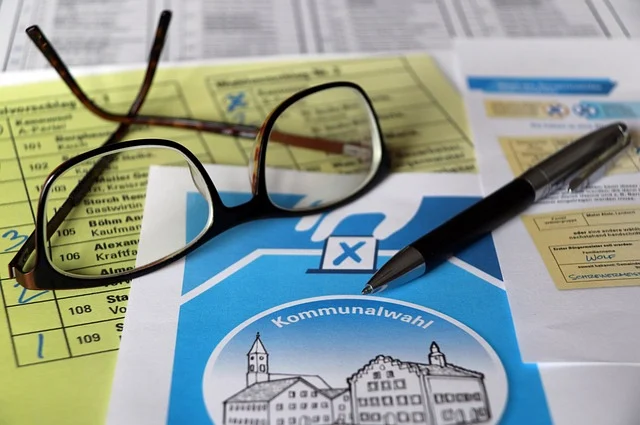
- United States: Most states allow pre-registration at 16 or 17. Some states have specific age requirements, such as only from 17½ or within a set time before the next election. A few states let 17-year-olds vote in primary elections if they turn 18 by the date of the general election. Always check your state’s specific rules.
- England and Northern Ireland: You can register from 16 years old. You can vote at 18 in general elections and local elections in England, and all elections in Northern Ireland.
- Scotland and Wales: You can register from 14 years old. You can vote from 16 in devolved (Scottish Parliament/Senedd) and local elections.
- Canada: 14- to 17-year-olds can be added to the Register of Future Electors. Elections Canada uses this register to automatically add them to the National Register of Electors when they turn 18.
Who this advice does not suit
The advice to pre-register primarily benefits those who will reach the voting age before or on election day. If you will not be of voting age by polling day, even if you are only a few days short, you cannot vote in that specific election. Pre-registration helps you avoid missing future elections, but it does not bypass the age requirement for a current election. Additionally, some countries do not offer pre-registration, requiring you to wait until you are of voting age to register.
A short history of voting ages
For much of the 20th century, 21 was the usual voting age in democracies, a legacy from common law traditions. This began to change significantly in the mid-20th century.
A major wave of reforms between 1969 and 1975 lowered the voting age to 18 in many Western countries. This included the UK (1970), the United States (1971), Canada (1970 federally), Australia (1973), France (1974) and many others. This shift was partly in response to young people serving in wars and the growing student population, who argued they deserved a voice in the decisions affecting their lives. The feeling was that if someone was old enough to fight for their country, they were old enough to vote.
Since 2000 a smaller wave has gone further, lowering the voting age to 16 in several countries and regions. Brazil allowed voting from 16 in 1988, Austria in 2007, Argentina in 2012, Scotland from 2014–15 and Malta in 2018. This more recent trend reflects evolving views on youth civic engagement and maturity.

Voting age and turnout
The impact of lowering the voting age on voter turnout is a key area of study. Proponents often argue that it can boost participation, while critics express concern about potentially lower engagement from younger demographics.
Research from Austria and Scotland suggests that 16- and 17-year-olds, often still at home and in school, turn out at similar or slightly higher rates than 18- to 20-year-olds. This is sometimes attributed to civic education efforts in schools and the support structures of family and educators. These may encourage participation. The act of voting early can also make people more likely to keep voting throughout their lives. It fosters a long-term habit.
However, critics point out that results vary by country and election type. While specific instances show positive turnout among 16 and 17-year-olds, overall turnout among all young voters (typically 18-24) remains lower than among older age groups in most established democracies. This suggests that simply lowering the age does not automatically solve broader issues of youth political disengagement. Other factors heavily influence turnout across all age groups. These include the perceived relevance of elections, candidate appeal, and ease of registration.
Minimum ages to stand for office
Being old enough to vote doesn’t mean you can run for every office. Countries often set higher minimum ages for holding elected office than for voting, reflecting the perceived need for greater experience, maturity, and public trust in leadership roles.
- In the United States, you must be 25 to sit in the House of Representatives, 30 for the Senate, and 35 for President. These age requirements are enshrined in the Constitution.
- In the UK, you can stand for Parliament (House of Commons) at 18. However, positions like a Member of the House of Lords have different appointment criteria.
- Many countries set higher ages for upper houses or heads of state, beyond the normal voting age by country. For example, some nations require candidates for the presidency or a seat in an upper legislative chamber to be 35 or even 40. This creates a tiered system of political participation. There, the right to elect is distinct from the right to be elected to certain positions.
Compulsory voting
In about 20 countries, voting is compulsory for adults. This means eligible citizens face penalties, such as fines, if they do not vote without a valid reason. Countries like Australia, Belgium, Brazil, and Argentina implement compulsory voting to boost participation and ensure a broad representation of the electorate.
In Brazil and Argentina, while voting is compulsory for most adults, it is optional for 16- and 17-year-olds, as well as for older voters (typically over 70). This provides a degree of flexibility for these age groups. Australia, known for its strict enforcement, fines eligible citizens who don’t vote without a valid reason. As a result, turnout there is usually around 90%, significantly higher than in countries where voting is voluntary.
Compulsory voting aims to increase democratic legitimacy by ensuring higher participation rates, but it can also spark debate about individual freedoms and the quality of votes cast under duress.
Frequently asked questions
Which countries let 16-year-olds vote?
Austria and Malta for all elections; Brazil, Argentina and Ecuador on a voluntary basis; Scotland and Wales for devolved and local elections.
When did the US voting age become 18?
In 1971, with the Twenty-Sixth Amendment.
Can I vote on my 18th birthday?
Generally yes, if you are registered and polling day is on or after your birthday. Always ensure you complete your voter registration by the specified deadline, which is typically before election day.
Is the UK lowering the voting age?
The government announced plans in July 2025 to lower it to 16 for all UK elections; it needs legislation to take effect. Currently, 16-year-olds can vote in devolved and local elections in Scotland and Wales, but not for UK general elections.
What is pre-registration for voting?
Pre-registration allows you to sign up to vote before you reach the legal voting age. Your registration becomes active once you turn the required age, ensuring you are ready to vote as soon as you are eligible. Many countries and US states offer this option, typically starting at age 16 or 17.
Sources
- Constitution Annotated: Twenty-Sixth Amendment
- GOV.UK: Types of election and who can vote
- International IDEA: Voter turnout and electoral data

Yasir Hafeez is the founder and editor of ItsAgeCalculator. He builds the calculators, writes and checks the guides and articles, and tests every result against fixed date rules. He also runs OmniMatrics, a site of everyday calculators and converters.