
In this article
Ethiopia has its own calendar, with 13 months and a year number 7 or 8 years behind the Gregorian one. The Ethiopian year 2019 began on 11 September 2026, and 2020 begins on 12 September 2027. Today, 22 October 2026, is 12 Tekemt 2019. Use the converter to change any date, and see it in eight other calendars at once.
Ethiopian calendar converter
This tool helps you accurately convert dates between the Ethiopian calendar and the Gregorian calendar. Simply input a date in either system, and the converter will show you the corresponding date. It also displays dates in several other major world calendars, providing a comprehensive view for international comparisons.
To use the converter:
- Select your input calendar: Choose ‘Gregorian’ if you know a date like 22 October 2026, or ‘Ethiopic’ if you have an Ethiopian date like 12 Tekemt 2019.
- Enter the date: Use the provided date picker or input fields to specify the day, month, and year.
- View the conversion: The tool automatically displays the equivalent date in the other calendar, along with other calendar systems.
- Check for specific events: If you are looking for a holiday or a personal event, double-check the year and month to ensure accuracy, especially around the Ethiopian New Year or leap years.
Why is the Ethiopian calendar 7–8 years behind?
The difference is not about counting from a different event. Both calendars count from Jesus’ birth. They disagree about when that birth was. The Gregorian (Western) count goes back to a calculation by the monk Dionysius Exiguus in the 6th century. The Ethiopian Orthodox Church follows an older calculation from Alexandria. This puts the Christian era’s start about seven to eight years later. An ethiopian calendar converter can help bridge this gap.

The gap is 7 years from 11 September to 31 December, and 8 years from 1 January to 10 September:
- 22 October 2026 → year 2019 (2026 − 7)
- 22 March 2027 → still year 2019 (2027 − 8)
- 12 September 2027 → year 2020 begins
Understanding the 7-Year vs. 8-Year Difference
Next, the year difference shifts because the Ethiopian New Year, Enkutatash, falls in Gregorian September. For any Gregorian date between January 1st and September 10th (or 11th in a Gregorian leap year), the Ethiopian year has not advanced. The Gregorian year has advanced. This makes the numerical difference appear as 8 years, which an ethiopian calendar converter would highlight.
For example, on January 1st, 2027 (Gregorian), the Ethiopian calendar is still in year 2019. So, 2027 – 2019 = 8 years. However, after September 11th, 2027, the Ethiopian calendar enters year 2020. At this point, 2027 – 2020 = 7 years. This pattern repeats annually.
The 13 months
The Ethiopian year has twelve months of 30 days each. Then comes a short 13th month, Pagume, of 5 days, or 6 days in a leap year. Every fourth year is a leap year; there are no exceptions. So, the calendar works like the old Julian calendar. Ethiopian year 2019 is a leap year. Its Pagume has six days. This is why 2020 starts on 12 September, not 11 September, as an ethiopian calendar converter would show.

| # | Month | 1st day in year 2019 |
|---|---|---|
| 1 | Meskerem | 11 September 2026 |
| 2 | Tikimt (Tekemt) | 11 October 2026 |
| 3 | Hidar | 10 November 2026 |
| 4 | Tahsas | 10 December 2026 |
| 5 | Tir | 9 January 2027 |
| 6 | Yekatit | 8 February 2027 |
| 7 | Megabit | 10 March 2027 |
| 8 | Miyazya | 9 April 2027 |
| 9 | Ginbot | 9 May 2027 |
| 10 | Sene | 8 June 2027 |
| 11 | Hamle | 8 July 2027 |
| 12 | Nehase | 7 August 2027 |
| 13 | Pagume (6 days) | 6 September 2027 |
Ethiopia’s tourism slogan “13 months of sunshine” comes from this calendar. Month names are often transliterated in several ways from Amharic, so you will see Tikimt or Tekemt, Hidar or Hedar.
The Julian Calendar Connection
The Ethiopian calendar has 12 months of 30 days. It adds a 5 or 6-day 13th month. Its leap year rule is every four years. This mirrors the ancient Julian calendar. Europe used the Julian calendar widely. This was until the Gregorian reform in 1582. Ethiopia was never colonized. It kept its traditional calendar. This Julian-like structure is why an Ethiopian calendar converter is useful.
This means the Ethiopian calendar slowly drifts further from the astronomical year over centuries, just as the Julian calendar did before its reform. However, for everyday purposes, this drift is minor and does not significantly impact daily life within Ethiopia.
Enkutatash: Ethiopian New Year
New Year’s Day, Enkutatash, is 1 Meskerem. It falls on 11 September in the Gregorian calendar, or on 12 September in the year before a Gregorian leap year — as in 2027, because 2028 is a leap year. It marks the end of the long rainy season, when yellow Meskel daisies bloom across the highlands.
Celebrating Enkutatash
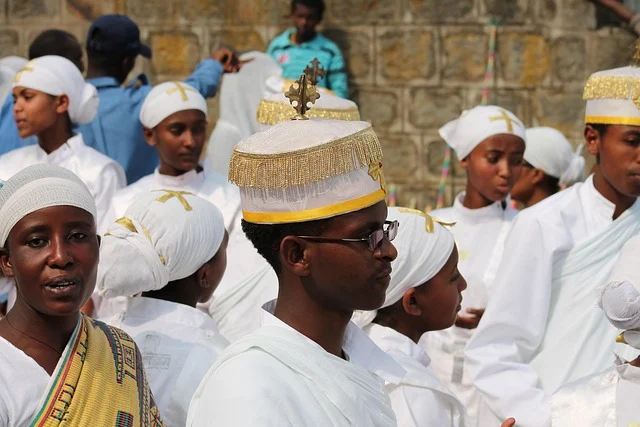
Enkutatash is a significant cultural and religious holiday. Families gather, often enjoying Doro Wat (spicy chicken stew) and injera. Young girls traditionally sing songs. They hand out bouquets of flowers, particularly bright yellow Meskel daisies. These symbolize the end of the rainy season and new beginnings. Churches hold special services. People light bonfires (Demera) in many areas. The larger bonfire ceremony is more associated with Meskel, celebrated a few weeks later. An ethiopian calendar converter can help track these dates.
The holiday is a time for renewal, gift-giving, and expressing wishes for a prosperous year. It is one of the most vibrant festivals, showcasing Ethiopia’s unique cultural heritage.
Main holidays and their Gregorian dates
| Holiday | Ethiopian date | Gregorian date |
|---|---|---|
| Enkutatash (New Year) | 1 Meskerem | 11 September (12 in some years) |
| Meskel (Finding of the True Cross) | 17 Meskerem | 27 September (28 in some years) |
| Genna (Christmas) | 29 Tahsas | 7 January |
| Timkat (Epiphany) | 11 Tir | 19 January (20 in some years) |
| Fasika (Easter) | moves | same day as Orthodox Easter — 2 May 2027 |
Genna falls on 7 January, the same day as Christmas in Russia, Serbia and other Orthodox churches that use the Julian calendar — see why Orthodox Christmas is on 7 January.
Important Considerations for Holiday Dates
While most Ethiopian holidays have fixed dates in the Ethiopian calendar, their Gregorian equivalents can shift by a day, especially around leap years. For example, Meskel is 17 Meskerem. In a Gregorian common year, this is 27 September. However, if the Gregorian year is a leap year (like 2028), then the Ethiopian New Year shifts to 12 September, and Meskel shifts to 28 September.
Fasika (Easter) is a movable feast, calculated based on the lunar calendar and the vernal equinox, similar to other Christian traditions. The Ethiopian Orthodox Tewahedo Church follows the Orthodox calculation for Easter, which can differ from Western Christian Easter by several weeks. Always consult a specific calendar for the exact date of Fasika in any given year.
Ethiopian time: the clock starts at sunrise
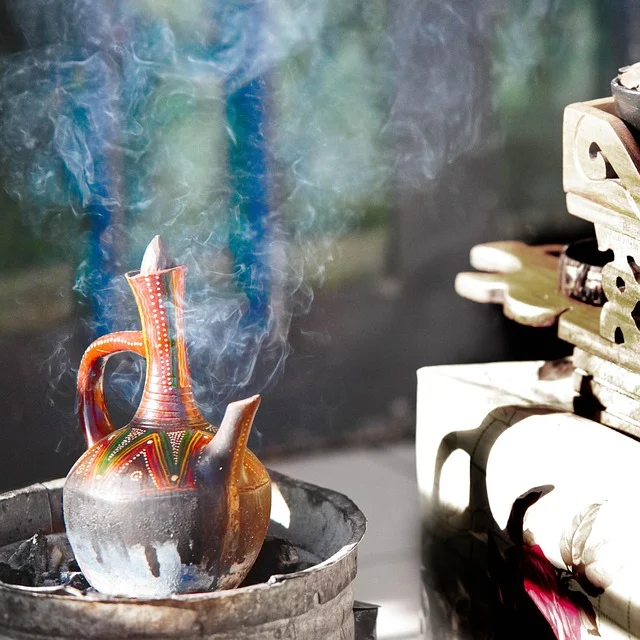
Ethiopia uses a different hour system. The day begins at dawn. 7:00 AM international time is “1 o’clock” Ethiopian time. Noon is 6 o’clock. Add or subtract six hours to convert. An ethiopian calendar converter helps with such time differences. Airline tickets and international business use the international clock. Everyday conversation, markets, and local buses use Ethiopian time. Always check the time system someone uses.
Converting Ethiopian Time to International Time (and vice versa)
The key to understanding Ethiopian time is recognizing that the 12-hour cycle begins at sunrise. Since sunrise is generally around 6:00 AM in Ethiopia (due to its proximity to the equator), 6:00 AM Gregorian time becomes 12:00 Ethiopian time (the start of the day). Subsequently, 7:00 AM Gregorian time is 1:00 Ethiopian time, and so on.
- To convert Gregorian time to Ethiopian time: Subtract 6 hours from the Gregorian time. For example, 3:00 PM (15:00) Gregorian becomes 9:00 Ethiopian (15 – 6 = 9). If the result is negative, add 12 (e.g., 5:00 AM Gregorian is 11:00 PM Ethiopian of the previous day). However, most commonly, people refer to daylight hours.
- To convert Ethiopian time to Gregorian time: Add 6 hours to the Ethiopian time. For example, 4:00 Ethiopian becomes 10:00 AM Gregorian (4 + 6 = 10).
This system works well in a country like Ethiopia where sunrise and sunset times are relatively consistent throughout the year. However, always confirm which time system someone is using to avoid confusion, especially for important appointments.
Ethiopian birth dates and age
Many Ethiopians have documents with an Ethiopian date of birth. School or university applications abroad need the Gregorian date. Convert the date with the ethiopian calendar converter tool above. Start near the right month. Adjust until the Ethiopian date matches. Then use the age calculator for your exact age. Your age is the same in both calendars. Both years are the same length. Only the year number differs.

The Eritrean Orthodox Church uses the same calendar, and the Coptic Church in Egypt uses a closely related one with the same month lengths but different month names and a different year count (the Coptic year 1743 began on 11 September 2026).
Common Problems with Birth Date Conversion
When converting birth dates for official documents, accuracy is crucial. A common issue arises when people estimate their birth year based on the Gregorian calendar, leading to inconsistencies. For instance, if someone born in Ethiopian year 1990 (Gregorian 1997 or 1998) incorrectly assumes their birth year is 1990 Gregorian, their age will be significantly off.
Always use a reliable converter or a calendar chart that specifically maps Ethiopian dates to Gregorian dates. If only an approximate birth year is known, converting from the Ethiopian year is more accurate than trying to guess the Gregorian equivalent, especially for legal and administrative purposes.
This advice is particularly relevant for individuals applying for visas, passports, education, or employment abroad, where precise Gregorian dates are mandatory. For casual personal use, a small discrepancy might not matter, but for official purposes, always aim for exact conversion.
Converting by hand
You can convert dates without a tool from September 11 to December 31. Count the days after September 11 (October 22 is 41 days). Divide by 30: the whole number plus one is the month. The remainder plus one is the day. 41 ÷ 30 = 1 remainder 11. So, October 22 is the 12th day of the 2nd month — 12 Tikimt. The year is the Gregorian year minus 7. After December 31, the same method works. Keep counting days from September 11. However, the year becomes the Gregorian year minus 8. Around a leap year, everything shifts by one day from September 12. Use an ethiopian calendar converter for exact results near the change.

Worked Example: Converting Gregorian to Ethiopian (Manual Method)
Let’s convert March 22, 2027 to the Ethiopian calendar manually.
- Determine the year difference: March 22, 2027, falls between January 1st and September 10th/11th. So, the Ethiopian year is 2027 – 8 = 2019.
- Count days from Ethiopian New Year:
- Meskerem (Sept 11 – Oct 10): 30 days
- Tikimt (Oct 11 – Nov 9): 30 days
- Hidar (Nov 10 – Dec 9): 30 days
- Tahsas (Dec 10 – Jan 8): 30 days
- Tir (Jan 9 – Feb 7): 30 days
- Yekatit (Feb 8 – Mar 9): 30 days
This takes us to March 9, 2027, which is the last day of Yekatit.
- Calculate remaining days in the current month:
- Days from Sept 11, 2026 to Mar 9, 2027 = 30*6 = 180 days.
- We need to convert March 22, 2027. The last full Ethiopian month ended on March 9, 2027.
- The next month is Megabit.
- Days remaining in March from March 10 to March 22 = 13 days.
- Determine the Ethiopian month and day:
- Since we passed Yekatit (6th month), the next month is Megabit (7th month).
- The day in Megabit is the number of remaining days, which is 13.
- Result: March 22, 2027, is 13 Megabit 2019.
This manual method requires careful counting and knowledge of the Ethiopian month lengths. It becomes more complex around leap years and is prone to error, especially when converting dates far from the New Year or across different Gregorian years. For high accuracy, especially for official documents, relying on a digital converter is always recommended.
Frequently asked questions
What year is it in Ethiopia?
2019, from 11 September 2026 to 11 September 2027. Year 2020 starts on 12 September 2027.
Why does Ethiopia have 13 months?
Twelve months of 30 days make 360 days, and a 13th month of 5 or 6 days completes the year, aligning it with the solar cycle. This 13th month, Pagume, accounts for the remaining days of the year.
When is Ethiopian Christmas?
Genna is celebrated on 7 January in the Gregorian calendar — 29 Tahsas in most years. This date aligns with other Orthodox churches that follow the Julian calendar for religious observances.
Is Ethiopia really 7 years behind?
Only in year numbering — the days themselves are the same. The gap is 7 years from September to December and 8 years from January to early September, due to the difference in when the Christian era is calculated to have started.
Does the Ethiopian calendar use a different time zone?
No, the Ethiopian calendar does not affect the time zone. Ethiopia uses East Africa Time (EAT), which is UTC+3. However, Ethiopia has its own unique way of counting the hours of the day, starting at sunrise, which is distinct from the international 24-hour clock.
Sources

Yasir Hafeez is the founder and editor of ItsAgeCalculator. He builds the calculators, writes and checks the guides and articles, and tests every result against fixed date rules. He also runs OmniMatrics, a site of everyday calculators and converters.