In this article
Orthodox Christmas falls on 7 January — next on Thursday 7 January 2027. It is still 25 December, but in the Julian calendar. This calendar is currently 13 days behind the Gregorian calendar most of the world uses. The countdown below shows how much time is left.
Orthodox Christmas date countdown
Two calendars, one Christmas
Understanding why Orthodox Christmas falls on 7 January requires a look at two different calendar systems: the Julian and the Gregorian. However, the difference between these calendars, and how various churches adopted them, explains the modern celebration dates.
The Julian Calendar: Caesar’s Innovation
Julius Caesar introduced the Julian calendar in 46 BCE. Before this, the Roman calendar was complex and often manipulated for political gain, leading to significant inaccuracies. Caesar’s reform aimed to align the calendar more closely with the solar year.
The Julian calendar established a year of 365 days. It also included a leap year of 366 days every four years. This gives an average year length of 365.25 days. This was a significant improvement for its time. It provided a more stable and predictable system for tracking seasons and religious festivals.
However, the real solar year (the time it takes for the Earth to orbit the Sun) is approximately 365 days, 5 hours, 48 minutes, and 45 seconds. This is about 11 minutes and 15 seconds shorter than the Julian year of 365.25 days. While seemingly small, this difference accumulates over centuries.
The Julian calendar fell behind actual astronomical seasons. It drifted one day every 128 years. This annual discrepancy impacted agriculture. More importantly for the Church, it affected accurate Easter calculations. Easter depends on the vernal equinox, which also impacts the orthodox Christmas date.

The Gregorian Calendar: Correcting the Drift
By the 16th century, the Julian calendar had a big error. The vernal equinox was around March 21 in Caesar’s time. Yet, it fell around March 11 in the calendar. People calculated Easter using an equinox that had passed. To fix this, Pope Gregory XIII introduced the Gregorian calendar in 1582. This change affected the orthodox christmas date for many.
The Gregorian reform involved two key changes:
- Skipping Days: To correct the accumulated error, authorities skipped ten days from the calendar. For example, Thursday 4 October 1582 was immediately followed by Friday 15 October 1582. This brought the vernal equinox back to 21 March.
- Revised Leap Year Rule: We refined the simple “every four years” leap year rule. Century years (years ending in ’00’) are now leap years only if they are perfectly divisible by 400. For example, 1600 and 2000 were leap years, but 1700, 1800, and 1900 were not. This adjustment makes the average Gregorian year 365.2425 days. It is much closer to the true solar year and reduces the drift to about one day every 3,030 years.
Catholic countries, like Spain, Portugal, and parts of Italy, quickly adopted the Gregorian calendar in 1582. Protestant nations changed more slowly over two centuries. Religious and political resistance often caused this delay. Great Britain and its colonies switched in 1752, skipping 11 days. As a result, this change impacted the orthodox christmas date for some. A Julian leap day had occurred in 1700.
The Calendar Divide: Civil vs. Ecclesiastical Adoption
Many Orthodox countries, like Russia, Greece, and Serbia, did not adopt the Gregorian calendar for civil life until the early 20th century. This delay often stemmed from strong cultural and religious traditions. There was also a reluctance to accept a calendar initiated by the Pope of Rome. This impacts the orthodox christmas date.
However, even after these countries adopted the Gregorian calendar for civil purposes (e.g., government, commerce, daily life), many Orthodox churches chose to retain the Julian calendar for their liturgical calendar, meaning for determining the dates of religious feasts. This created a divergence between the civil and ecclesiastical calendars.
The Gregorian calendar began in 1582. It omitted three leap days from the Julian calendar. These were in 1700, 1800, and 1900. Each skipped leap day increased the calendar difference. So, by 1900, the gap reached 13 days. This shift affects the orthodox christmas date. Julian December 25 now aligns with Gregorian January 7.
Who celebrates Christmas on 7 January?
Not all Orthodox churches celebrate Christmas on 7 January. The date of celebration depends on whether a particular church follows the traditional Julian calendar or the Revised Julian calendar for its fixed feasts. The Revised Julian calendar, introduced in 1923, aligns with the Gregorian calendar for fixed dates. However, it uses the Julian calculation for Easter.
| Church | Christmas date | Calendar for Fixed Feasts |
|---|---|---|
| Russian Orthodox Church | 7 January | Julian Calendar |
| Serbian Orthodox Church | 7 January | Julian Calendar |
| Georgian Orthodox Church | 7 January | Julian Calendar |
| Orthodox Patriarchate of Jerusalem | 7 January | Julian Calendar |
| Ethiopian and Eritrean Orthodox (Genna) | 7 January | Ethiopian Calendar (aligned with Julian for this date) |
| Coptic Orthodox Church (Egypt) | 7 January | Coptic Calendar (aligned with Julian for this date) |
| Greek Orthodox Church | 25 December | Revised Julian Calendar |
| Romanian Orthodox Church | 25 December | Revised Julian Calendar |
| Bulgarian Orthodox Church | 25 December | Revised Julian Calendar |
| Cypriot Orthodox Church | 25 December | Revised Julian Calendar |
| Orthodox Church of Ukraine | 25 December since 2023 | Revised Julian Calendar |
Orthodox churches that celebrate on 25 December
The Greek, Romanian, Bulgarian, and Cypriot Orthodox Churches, among others, adopted the Revised Julian calendar in the 20th century. This calendar matches the Gregorian calendar for fixed feasts like Christmas, so their Christmas is on 25 December. However, these churches still calculate Easter using the Julian calendar. This means they share the date of Orthodox Easter with churches that follow the Old Calendar.
In 2023, the Orthodox Church of Ukraine moved its fixed feasts to the Revised Julian calendar. Consequently, Ukraine also moved its public Christmas holiday to 25 December. This shift reflects a broader trend among some Orthodox communities seeking to align more closely with the Gregorian calendar for fixed feasts.
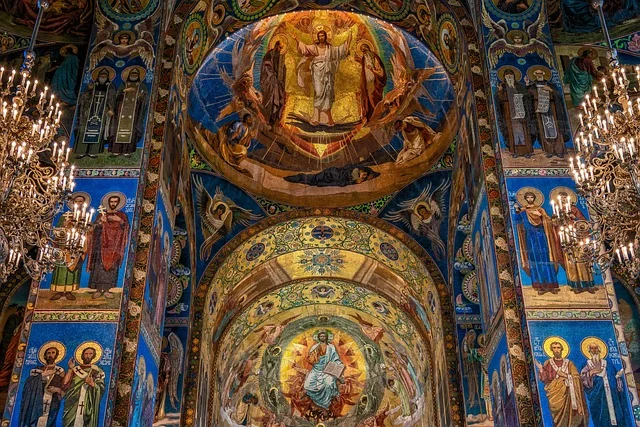
The Ethiopian and Eritrean Orthodox Tewahedo Churches, along with the Coptic Orthodox Church in Egypt, also celebrate Christmas on what corresponds to 7 January in the Gregorian calendar. These churches use their own distinct calendars (the Ethiopian calendar and the Coptic calendar, respectively). By historical alignment, these calendars currently place their Christmas celebrations on this date. You can explore these systems further with an Ethiopian calendar converter.
How Orthodox Christmas is celebrated
Orthodox Christmas traditions are rich and varied, often extending beyond Christmas Day itself, with a strong emphasis on spiritual preparation and family gatherings.
- The Nativity Fast: A significant period of spiritual preparation, this 40-day fast precedes Christmas. It begins on 28 November and concludes on 6 January for churches following the Julian calendar. During this fast, adherents abstain from meat, dairy products, eggs, and sometimes fish, depending on the specific tradition and day. It is a time for prayer, repentance, and almsgiving, preparing the faithful for the celebration of Christ’s birth.
- Christmas Eve (6 January): Families often mark this day with special customs. In Russia and Ukraine, people serve a traditional meatless supper of twelve dishes. These dishes symbolize the twelve apostles. The meal usually starts when the first star appears in the evening sky, representing the Star of Bethlehem. Dishes often include kutia (a ceremonial grain pudding), borscht, and various vegetable and fish preparations. In Serbia, Christmas Eve is known as Badnji dan. Families bring a badnjak (an oak branch or sapling) into their homes. The burning of the badnjak is a central ritual. It symbolizes the warmth of the Christmas fire and the light of Christ.
- Christmas Day (7 January): The celebration culminates with a long and solemn night liturgy. This often lasts for several hours into the early morning of Christmas Day. This divine service is a profound spiritual experience. It commemorates the birth of Jesus Christ. Following the liturgy, families gather for a festive meal. They break the Nativity Fast with rich dishes that include meat and dairy. Christmas Day is a public holiday in many countries where people follow the Julian calendar for religious feasts. These include Russia, Serbia, Georgia, Belarus, Kazakhstan, Egypt, Ethiopia, Eritrea, Moldova, Montenegro, and North Macedonia.
Russian New Year gift traditions
In Russia, people traditionally exchange gifts on New Year’s Eve. Ded Moroz (Grandfather Frost) and his granddaughter Snegurochka (Snow Maiden) present them. This occurs rather than on the orthodox christmas date. This custom largely stems from the Soviet era. Authorities suppressed public religious holidays then. New Year celebrations absorbed many traditional Christmas customs and symbols. These included gift-giving and decorated trees.
The “Old New Year” on 14 January
The Julian New Year falls 13 days after the Gregorian one, just as the orthodox christmas date does. Many in Russia, Serbia, Montenegro, and North Macedonia celebrate the Old New Year on January 13–14 night. This offers a second, quieter New Year’s Eve. It follows the official Gregorian New Year on December 31. This is a time for family gatherings and traditional meals. People set intentions for the year ahead. These are distinct from larger public festivities. In 2027, January 14 is a Thursday.
From 2101, Christmas moves to 8 January
The Julian and Gregorian calendars’ gap grows. The year 2100 shows another divergence. It is a Julian leap year, divisible by 4. It is not a Gregorian leap year, a century year not divisible by 400. Thus, on 1 March 2100, the difference increases by a day. This will impact the orthodox Christmas date, making the total difference 14 days.
Consequently, from 1 March 2100 onwards, the orthodox Christmas date of Julian 25 December will fall on Gregorian 8 January. If nothing changes in ecclesiastical practices, Julian Christmas will continue its drift. It will eventually fall in February in the far future. The Julian calendar continues its slow drift from the solar year.
Converting Julian and Gregorian dates
Historians use “Old Style” (O.S.) for Julian dates. They use “New Style” (N.S.) for Gregorian dates. This clarifies the calendar reference. The same date can mean different days. For example, the 1917 Russian “October Revolution” happened on 25 October O.S. This was 7 November N.S. on the Gregorian calendar. The orthodox christmas date is one example of such a difference. People commemorate it in November.
Practical Date Conversion Steps:
- Identify the Date Range: The number of days to add depends on the century.
- Apply the Offset:
- For dates between 1 March 1900 and 28 February 2100 (Gregorian), add 13 days to the Julian date.
- For dates in the 19th century (1 March 1800 to 28 February 1900 Gregorian), add 12 days.
- Next, for dates in the 18th century (1 March 1700 to 28 February 1800 Gregorian), add 11 days.
- For dates between 5 October 1582 and 28 February 1700 Gregorian, add 10 days.
- Adjust for Month/Year if Necessary: If adding the offset pushes the date into the next month or year, adjust accordingly.
Worked Example: Converting Julian 25 December 1950 to Gregorian
- Julian Date: 25 December 1950
- Offset: Since 1950 falls within the 1 March 1900 to 28 February 2100 range, you add 13 days.
- Calculation: 25 December + 13 days = 38 December. Since December has 31 days, 38 – 31 = 7.
- Result: The date rolls over into the next month and year. So, 25 December 1950 (Julian) converts to 7 January 1951 (Gregorian). This illustrates why Christmas on Julian 25 December today is Gregorian 7 January.
To count the exact number of days between two dates in the modern calendar, you can use a days between dates calculator.

Who this advice does not suit
This conversion applies to historical dates. It helps understand Julian and Gregorian calendar differences. This is for fixed feasts, like the Orthodox Christmas date. It does not apply to movable feasts. Easter has complex rules. These rules tie to Julian calendar equinox calculations. Some churches use the Revised Julian calendar for fixed feasts. Still, their Easter calculations use the Julian calendar.
Frequently asked questions
When is Orthodox Christmas 2027?
Orthodox Christmas in 2027 falls on Thursday 7 January, with Christmas Eve observed on Wednesday 6 January.
Why is Orthodox Christmas on 7 January?
The churches that celebrate on 7 January adhere to the Julian calendar for fixed feasts. In this calendar, Christmas is on 25 December, which currently corresponds to 7 January in the widely used Gregorian calendar, due to a 13-day difference accumulated over centuries.
Do all Orthodox Christians celebrate on 7 January?
No. Many Orthodox churches, including the Greek, Romanian, Bulgarian, Cypriot, and Ukrainian Orthodox Churches, adopted the Revised Julian calendar for fixed feasts. As a result, they celebrate Christmas on 25 December, aligning with the Gregorian calendar.
Will Orthodox Christmas always be on 7 January?
No, not indefinitely. The current 13-day difference between the Julian and Gregorian calendars will increase to 14 days from 1 March 2100. As a result, from 2101 onwards, Orthodox Christmas (Julian 25 December) will fall on Gregorian 8 January.
What is the “Old New Year”?
The “Old New Year” is a traditional, unofficial holiday celebrated on the night of 13–14 January in some countries that historically used the Julian calendar. It marks the New Year according to the Julian calendar, 13 days after the official Gregorian New Year.
Sources

Yasir Hafeez is the founder and editor of ItsAgeCalculator. He builds the calculators, writes and checks the guides and articles, and tests every result against fixed date rules. He also runs OmniMatrics, a site of everyday calculators and converters.