

In this article
- Weeks-in-a-year calculator
- The arithmetic of weeks and days
- Which weekday appears 53 times?
- Week numbers: why some years have 53
- Weeks in a month
- Weeks in a quarter, a half-year and a pregnancy
- Paydays and the "27th paycheck"
- Work weeks and school weeks
- How many weeks old are you?
- Frequently asked questions
- Sources
A year has 52 weeks and 1 day. A leap year has 52 weeks and 2 days. That leftover day or two is why some years contain 53 Mondays or 53 Fridays, why some payroll years have an extra payday, and why the ISO week calendar sometimes has a week 53. 2026 is one of those years: it starts on a Thursday, so it has 53 Thursdays and 53 ISO weeks.
Weeks-in-a-year calculator
Enter any year to see its number of days and weeks, which weekdays occur 53 times, and whether it has 52 or 53 weeks in the ISO 8601 system.
The arithmetic of weeks and days
A week is 7 days. This seven-day cycle has ancient origins, rooted in astronomical observations of lunar phases and cultural traditions, eventually becoming a global standard for organizing time.
An ordinary common year has 365 days. To find the number of weeks, you divide 365 by 7. This gives you 52 with a remainder of 1 (365 ÷ 7 = 52 full weeks and 1 day leftover). This means you have 52 complete, seven-day periods, plus one additional day that starts a new week but does not complete it within that calendar year.
A leap year has 366 days. When you divide 366 by 7, you get 52 with a remainder of 2 (366 ÷ 7 = 52 full weeks and 2 days leftover). The extra day in a leap year occurs in February, making it 29 days long instead of 28. This additional day directly contributes to the second leftover day for the year.
| Common year | Leap year | |
|---|---|---|
| Days | 365 | 366 |
| Weeks | 52 weeks + 1 day (52.14) | 52 weeks + 2 days (52.29) |
| Hours | 8,760 | 8,784 |
| Minutes | 525,600 | 527,040 |
The Gregorian calendar aligns with Earth’s orbit. This orbit takes about 365.2425 days. Common and leap years account for this fraction. So, a year is 365.2425 days over 400 years. This is 52.1775 weeks. The question of how many weeks are in a year shows no perfect integer. As a result, this causes “extra” days and occasional 53-week years.
Which weekday appears 53 times?
The leftover day or two directly determines which weekdays occur 53 times. There are how many weeks in a year, which means 52 full weeks account for 52 occurrences of every weekday. The remaining days then “top up” specific weekdays.
- In a common year (365 days): You have 52 weeks and 1 extra day. This extra day is always the same weekday as 1 January. Therefore, the weekday of 1 January appears 53 times, and every other weekday appears 52 times.
- In a leap year (366 days): You have 52 weeks and 2 extra days. These two extra days are always 1 January and 2 January. So, the weekdays of both 1 January and 2 January appear 53 times each, while the remaining five weekdays appear 52 times.
Worked Examples:
- 2026 (Common Year): 1 January 2026 was a Thursday. Consequently, 2026 has 53 Thursdays. All other weekdays (Friday, Saturday, Sunday, Monday, Tuesday, Wednesday) occur 52 times.
- 2027 (Common Year): 1 January 2027 is a Friday. This means 2027 will have 53 Fridays.
- 2028 (Leap Year): 1 January 2028 is a Saturday, and 2 January 2028 is a Sunday. Therefore, 2028 will have 53 Saturdays and 53 Sundays.
This pattern affects planning for recurring weekly events. A Thursday meeting occurs 53 times in 2026. Your family’s Sunday dinner tradition will happen 53 times in 2028.
Week numbers: why some years have 53
Many businesses, schools, and personal diaries number the weeks of the year. This helps with scheduling, project management, and reporting, providing a consistent way to refer to specific periods within a year.
The international standard for this system is ISO 8601, widely adopted across Europe and integrated into much software and business planning tools:
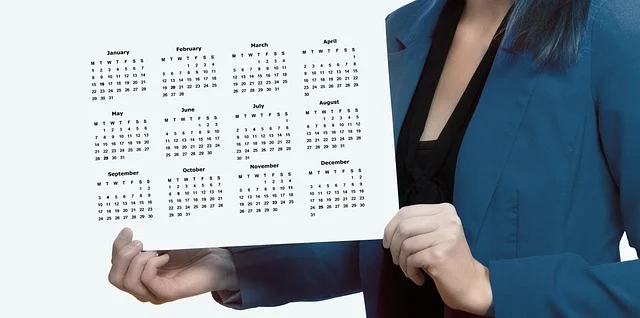
- ISO weeks consistently start on a Monday and end on a Sunday.
- Week 1 is defined as the first week that contains at least four days of the new year. This rule means week 1 always contains the year’s first Thursday (equivalently, the week containing 4 January).
- Because of this definition, the first few days of January might belong to the last week (week 52 or 53) of the previous year. Similarly, the last few days of December might belong to week 1 of the following year. This overlap ensures every week number is a full seven days and belongs unequivocally to one year or the other.
When a year has 53 weeks
Under these ISO 8601 rules, most years have 52 ISO weeks. However, a year has 53 ISO weeks if it meets one of these two criteria:
- It starts on a Thursday (e.g., 2026).
- It is a leap year that starts on a Wednesday (e.g., 2020, 2048).
This phenomenon happens in 71 of every 400 years within the Gregorian calendar cycle, occurring roughly every five or six years. Recent and upcoming 53-week years include 2015, 2020, 2026, 2032, 2037, 2043, and 2048. In 2026, ISO week 53 runs from Monday 28 December 2026 to Sunday 3 January 2027.
The United States uses a “Sunday-start” system. Weeks begin on Sunday. Week 1 holds January 1st. This creates large differences. January 1, 2026, is a Thursday. ISO places it in week 53 of 2025. The US system puts it in week 1 of 2026. Always clarify the system used. This is important when discussing how many weeks are in a year for a supplier, school, or business. They might refer to “week 23” or another week number.
Weeks in a month
Months do not contain an exact number of weeks, which often leads to confusion in planning and budgeting. An average month has 365.2425 days ÷ 12 months = 30.44 days. Dividing this by 7 days per week, an average month contains about 4.35 weeks.
- February in a common year (28 days): This is the only month that contains exactly 4 weeks (28 ÷ 7 = 4).
- Months with 30 days: These months contain 4 weeks and 2 days (30 ÷ 7 = 4 remainder 2).
- Months with 31 days: These months contain 4 weeks and 3 days (31 ÷ 7 = 4 remainder 3).
This uneven distribution is why converting monthly and weekly figures requires careful approximation. A common problem in budgeting is simply multiplying a weekly amount by 4 to estimate a monthly cost; this often understates the actual cost because most months are longer than 4 weeks. A more accurate approximation for monthly budgeting is to multiply a weekly amount by 52 (weeks in a year) and then divide by 12 (months in a year), which gives you approximately 4.33 weeks per month.
Weeks in a quarter, a half-year and a pregnancy
Many planning cycles align with weeks rather than months due to the consistent length of a week. This provides more granular and predictable scheduling.
- Quarters: A quarter of a year is roughly a quarter of 52.18 weeks, which rounds to approximately 13 weeks. Many businesses structure their financial and operational planning into 13-week quarters. Some even divide these quarters into blocks of 4, 4, and 5 weeks. This specific arrangement ensures that each quarter always ends on the same weekday, simplifying recurring tasks and reporting cycles.
- Half-year: Half a year is simply half of 52 weeks, or 26 weeks.
- Pregnancy: Medical professionals and expectant parents commonly track pregnancy duration in weeks rather than months. A full-term pregnancy is typically counted as 40 weeks from the first day of the last menstrual period. This equates to a little over nine calendar months. Counting in weeks provides a more precise and standardized measurement of fetal development and due dates compared to the variable length of calendar months.

Paydays and the “27th paycheck”
The extra day or two in a year significantly impacts payroll schedules, especially for employees paid weekly or biweekly. Understanding this can help you manage your personal finances and avoid surprises.
- Weekly Pay: If your employer pays you weekly, most years you receive 52 paychecks. However, if the year’s extra weekday matches your payday, you will receive 53 paychecks that year. For instance, if you get paid every Friday and the year has 53 Fridays (as 2027 will), you will have an extra payday.
- Biweekly Pay (Every Two Weeks): If you are paid every two weeks, most years you receive 26 paychecks (52 weeks ÷ 2). The “leftover” days accumulate over time. Roughly once every 11 years, a calendar year will contain 27 biweekly paydays. This depends on the specific date of your first payday in that cycle. For example, if your first biweekly payday of the year falls very early in January, it increases the chance of a 27th payday later in the year.
For employees, a 27th paycheck can feel like a bonus, offering an opportunity to pay down debt, save, or make an extra investment. However, employers who calculate annual salaries for biweekly pay typically divide the annual amount by 26. When a 27th payday occurs, they may adjust the amount of each paycheck to ensure the total annual salary remains consistent, effectively spreading the annual salary over 27 pay periods instead of 26. This means each individual paycheck might be slightly smaller in a 27-paycheck year. Always check your employer’s pay calendar or human resources department for their specific policy when a 53-Friday or 27-paycheck year approaches.

Work weeks and school weeks
A calendar year has 52 or 53 weeks. The question of how many weeks in a year you work is less. Distinguish calendar weeks from active weeks. This aids personal and professional planning.
- Work Weeks: For a full-time employee, you subtract public holidays and paid leave from the total calendar weeks. This typically results in around 46 to 48 working weeks per year, though this varies significantly depending on the country, your employment contract, and your personal choices regarding leave. For example, if you have 4 weeks of paid vacation and 10 public holidays (which might consume 2 working weeks), you effectively work for 52 – 4 – 2 = 46 weeks.
- School Weeks: School years are generally shorter than working years. In many educational systems, they run for approximately 36 to 40 weeks. This accounts for summer breaks, winter holidays, spring breaks, and other non-instructional periods.
Need to count exact weeks and days? Use the days between dates calculator. This tool is perfect for due dates, exams, or holidays. Also, it shows how many weeks in a year or between dates. Get a precise count. Avoid average week approximations.

How many weeks old are you?
Looking at age in weeks can offer a different perspective on the passage of time. While we commonly measure age in years, weeks provide a more granular count, especially for infants.
- A 30-year-old has lived approximately 1,565 weeks (30 years × 52.1775 weeks/year).
- A 50-year-old has lived about 2,609 weeks (50 years × 52.1775 weeks/year).
For precise age calculations, the days-old calculator shows your exact age. It provides weeks, days, hours, and minutes. The baby age calculator helps new parents. Doctors count a baby’s age in weeks for the first months. This tracks developmental milestones, showing how many weeks are in a year of a baby’s life.

Frequently asked questions
How many weeks are in a year?
There are 52 weeks and 1 day in a common year of 365 days, and 52 weeks and 2 days in a leap year of 366 days.
Does 2026 have 53 weeks?
Yes, in ISO 8601 week numbering. 2026 starts on a Thursday, so it has 53 ISO weeks; week 53 runs from Monday 28 December 2026 to Sunday 3 January 2027. 2026 also has 53 Thursdays.
How many weeks are in a month?
On average 4.35 weeks (30.44 days ÷ 7). February in a common year is exactly 4 weeks; 31-day months are 4 weeks and 3 days.
How many working weeks are in a year?
Typically 46 to 48 for a full-time employee once public holidays and paid leave are subtracted from the 52 weeks, though it depends on the country and employer.
When is the next year with 53 weeks?
After 2026, the next years with 53 ISO weeks are 2032, 2037, 2043 and 2048.
Sources
- Wikipedia: ISO week date (rules for 53-week years)
- U.S. Naval Observatory: Leap years and the 365.2425-day Gregorian year
- Epoch Converter: Week numbers for 2026

Yasir Hafeez is the founder and editor of ItsAgeCalculator. He builds the calculators, writes and checks the guides and articles, and tests every result against fixed date rules. He also runs OmniMatrics, a site of everyday calculators and converters.