In this article
Japan numbers its years by imperial era and Western calendar. 2026 is Reiwa 8 (令和8年); 2027 will be Reiwa 9. To convert Reiwa to Western, add 2018. For Heisei, add 1988; for Shōwa, add 1925. Also, a Japanese era converter below shows the era date for any day. You can check dates near era changes exactly.
Japanese era date converter
Understanding the Modern Eras: Reiwa, Heisei, and Shōwa
Since 1868, Japan has followed a distinct system for naming its imperial eras (gengō). Each new emperor’s reign marks the start of a new era, and the year count for that era restarts at 1. This system, known as issen ichi dai (一世一元), means “one era name per reign.” The first year of an era often uses the term gannen (元年) instead of “year 1,” emphasizing its inaugural status.
The “one era per reign” rule, from the Meiji Restoration, stabilized the calendar. Before 1868, era names changed often. This happened multiple times in one emperor’s reign. Events like disasters, epidemics, or omens caused this. A japanese era converter now simplifies record-keeping. It provides a clear historical framework. This system ties directly to the imperial lineage.
| Era | Kanji | First day | Last day | Western year = |
|---|---|---|---|---|
| Reiwa | 令和 | 1 May 2019 | — | Reiwa year + 2018 |
| Heisei | 平成 | 8 January 1989 | 30 April 2019 | Heisei year + 1988 |
| Shōwa | 昭和 | 25 December 1926 | 7 January 1989 | Shōwa year + 1925 |
| Taishō | 大正 | 30 July 1912 | 25 December 1926 | Taishō year + 1911 |
| Meiji | 明治 | 23 October 1868 (applied from the start of that year) | 30 July 1912 | Meiji year + 1867 |
Change-over years have unique situations. One calendar year has two era names. For example, 1989 was Shōwa 64 (January 1-7). It transitioned to Heisei 1 from January 8. Similarly, 2019 was Heisei 31 until April 30. It became Reiwa 1 from May 1. A simple year-based conversion table is insufficient then. It fails for dates in these transition periods. Always use a japanese era converter for exact accuracy on these dates.
How to derive the conversion formulas
You can easily derive the conversion formula for any era. The Western year equivalent of the first year (or gannen) of an era is the key. For example, Reiwa 1 began on May 1, 2019. If Reiwa 1 = 2019, then Reiwa year + (2019 – 1) = Western year. So, Reiwa year + 2018 = Western year. Apply this logic to other eras:
- Heisei: Heisei 1 began on January 8, 1989. So, Heisei year + (1989 – 1) = Heisei year + 1988.
- Shōwa: Shōwa 1 began on December 25, 1926. So, Shōwa year + (1926 – 1) = Shōwa year + 1925.
- Taishō: Taishō 1 began on July 30, 1912. So, Taishō year + (1912 – 1) = Taishō year + 1911.
- Meiji: Meiji 1 began on October 23, 1868 (applied from the start of that year). So, Meiji year + (1868 – 1) = Meiji year + 1867.
Worked Examples for Era Conversion
Let’s practice converting Japanese era years to Western years using the formulas:
- Reiwa 5: Add 2018. 5 + 2018 = 2023.
- Heisei 15: Add 1988. 15 + 1988 = 2003.
- Shōwa 40: Add 1925. 40 + 1925 = 1965.
- Taishō 10: Add 1911. 10 + 1911 = 1921.
- Meiji 35: Add 1867. 35 + 1867 = 1902.
For dates near an era change, remember to check the exact date. For instance, if you see a document dated “Shōwa 64, January 5,” you know it’s January 5, 1989. If it says “Heisei 1, January 10,” it’s January 10, 1989. The converter becomes invaluable for these precise moments.
Quick conversions
This table provides a quick reference for common Western years and their Japanese era equivalents. Use it for a general sense of the era, but always refer to the converter or the specific era start/end dates for absolute precision, especially around era transitions.
| Western year | Japanese era year |
|---|---|
| 2027 | Reiwa 9 |
| 2026 | Reiwa 8 |
| 2020 | Reiwa 2 |
| 2019 | Heisei 31 / Reiwa 1 (gannen) |
| 2000 | Heisei 12 |
| 1995 | Heisei 7 |
| 1989 | Shōwa 64 / Heisei 1 |
| 1980 | Shōwa 55 |
| 1970 | Shōwa 45 |
| 1964 | Shōwa 39 |
| 1950 | Shōwa 25 |
Where you will see era dates
Western years are common daily in Japan. Era years are crucial for official documents and formal contexts. You will see them on vital records. These include your residence card (zairyū card) and My Number card. Also, the family register (koseki tōhon), driving licences, tax forms, bank forms, contracts, and pension documents use them. Understanding era dates is not just cultural. It is a practical necessity for anyone in Japan. A Japanese era converter can help with official matters.

Many forms ask for the era. Circle R (Reiwa), H (Heisei), S (Shōwa), T (Taishō), or M (Meiji). Then write the year. For example, June 10, 1990 is H2.6.10. March 3, 1985 is S60.3.3. Use a japanese era converter to help. Correctly writing your birth year is critical. It avoids delays or application rejection.
Common Problems and Solutions
Foreign residents frequently make mistakes when filling out Japanese forms because they default to Western years. The form expects an era year, and writing “1990” instead of “H2” will cause issues. Always double-check the form’s instructions. If it asks for a “年号” (nengō – era name) or shows “元号” (gengō – era name) as a field, use the era year. The formulas above, or the converter, help you avoid this common mistake.
Step-by-step example for filling out a form:
- First, locate the date field on the Japanese form. It might have options like R, H, S, T, M.
- Identify your birth year in the Western calendar (e.g., 1990).
- Determine the correct Japanese era. 1990 falls within the Heisei era.
- Calculate the Heisei year: 1990 – 1988 = Heisei 2.
- Circle “H” on the form.
- Write “2” in the year field.
- Next, add your birth month and day (e.g., 6.10 for June 10). The final entry would be “H2.6.10”.
Getting this right is crucial for visa renewals, opening bank accounts, applying for jobs, or any process requiring official identification. An incorrect date can lead to your application being returned, prolonging administrative processes.
Who This Advice Does Not Suit
A casual tourist in Japan for a short period needs no conversion rules. Most tourist services use Western years. However, if you plan to live, work, or study in Japan, or engage in formal business, a solid understanding of the era calendar is essential. For these situations, a Japanese era converter can be a very helpful tool.
How to work out your age from an era date
To calculate age from an era date, first convert the era year. Then, calculate your age normally. For instance, Heisei 8, May 5 is an example. Add 1988 to 8, which is 1996. So, your birth date is May 5, 1996. Use an age calculator to find your exact age.

Japan officially counts age the international way – you become one year older on your birthday – and has done so by law since 1950. Before this, Japan used a traditional East Asian age system. In this system, a baby was considered 1 year old at birth, and everyone aged by one year on New Year’s Day, regardless of their actual birthday. This meant you could be two years older by traditional count than by the international system. Our guide to East Asian age systems explains this traditional method in more detail.
Knowing how to convert era dates to calculate age is important for understanding eligibility for various services, such as voting rights, pension benefits, or even purchasing alcohol and tobacco, where age limits are strictly enforced based on the Western calendar equivalent of your birthdate.
How era names are chosen
Japan’s era name system began in the Taika (大化) era, 645. For over a millennium, era names changed often. This happened in response to big events. Natural disasters, economic downturns, or even comets caused changes. An emperor could have many era names. However, the Meiji government changed this in 1868. They established the issen ichi dai principle. This means one era name per emperor. This rule brought consistency. It linked the era directly to imperial succession. A Japanese era converter can help understand these changes.
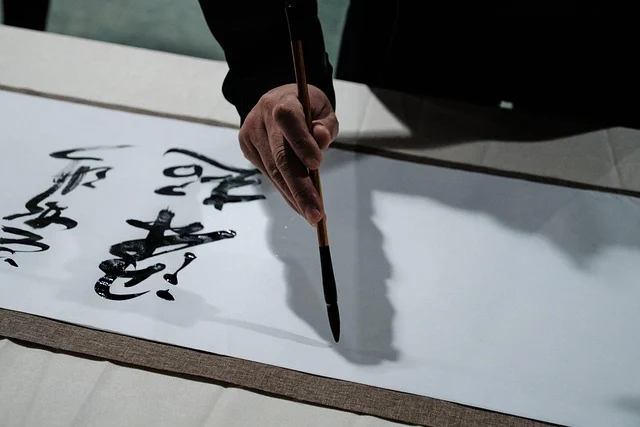
The 1979 Era Name Act formalized the process for selecting new era names. Under this law, the government’s cabinet chooses the name. A committee of experts, including scholars and historians, proposes several candidates. These names must meet specific criteria for a Japanese era converter: they must consist of two kanji characters, be easy to read and write, not be commonly used as personal or place names, and not have been used in previous eras. The final selection aims for a name reflecting desired values and aspirations for the new era.
The Reiwa era name, announced April 1, 2019, departed from tradition. This was a month before Emperor Naruhito’s accession on May 1. It was the first era name from a Japanese classic. The poetry anthology Man’yōshū was the source, not Chinese texts. This choice emphasized Japanese cultural identity. The name Reiwa translates to “beautiful harmony” or “auspicious harmony.” It reflects a hope for unity and peace, and a Japanese era converter can assist with such historical periods.
Era dates and computers
The transition from the Heisei to the Reiwa era presented a significant challenge for software developers globally. It required a large-scale software project to ensure all systems could correctly process and display the new era name and its associated dates. Key updates included:
- Unicode: The Unicode Consortium added a new single character for the Reiwa era (㋿, U+32FF) to ensure consistent representation across digital platforms.
- Operating Systems: Major operating systems like Windows, macOS, and Linux, along with mobile platforms, released updates to their Japanese calendar data. These updates allowed computers to correctly identify the start date of Reiwa and perform conversions.
- Software Applications: Programs ranging from word processors and spreadsheets to complex government databases and financial systems needed updates to handle the new era. This involved updating date pickers, input validation, and display formats.
Modern browsers and up-to-date software already know current eras. Thus, the converter above functions without relying on a server. However, if using older software, particularly older spreadsheet programs like Microsoft Excel or specific database systems, you might encounter issues. For example, if your software displays “Heisei 38” for the year 2026, its calendar data is out of date. This can lead to incorrect date entries. Data processing errors and compatibility problems may arise when exchanging files with updated systems. A Japanese era converter can help identify these discrepancies.
Troubleshooting Outdated Software
If you encounter incorrect era dates in your software:
- Update your operating system: Ensure your Windows, macOS, or Linux system is fully updated. These updates often include the latest calendar data.
- Update your applications: Check for updates to productivity software, database systems, and any custom applications that handle dates.
- Check language and region settings: Ensure your computer’s region and language settings are correctly configured for Japan, as this often influences calendar display.
- Consult software vendor support: If problems persist, contact the software vendor for specific patches or guidance.
For critical government or business systems, organizations often plan months or years in advance for era changes to ensure smooth transition and avoid disruptions. This proactive approach highlights the complexity and importance of the Japanese era calendar in digital environments.
Writing dates the Japanese way
A complete Japanese date typically follows a year–month–day format, with the era name preceding the year. For example, October 22, 2026, is written as 令和8年10月22日 (Reiwa 8, month 10, day 22). On many forms, this is often abbreviated to a more concise format, such as R8.10.22. Older documents will use H, S, T, or M for the earlier eras.

Remember that the first year of an era is often written as 元年 (gannen). So, May 1, 2019, the start of the Reiwa era, would be written as 令和元年5月1日. This usage of gannen is purely ceremonial and numeric: it still represents “year 1.”
Japanese people often say “the ninth year of Reiwa.” They do not just say “Reiwa nine.” This can cause a pause. People mentally convert era years. Or they convert Western years. A Japanese era converter can help. Many calendars print both year types. The Western year is often smaller. It sits under the era year. This offers an easy daily reference.
Frequently asked questions
What year is it in Japan?
2026 is Reiwa 8 (令和8年). However, Reiwa 9 starts on 1 January 2027 — era years change on 1 January, not on the anniversary of the era.
How do I convert Heisei to a Western year?
Add 1988 to the Heisei year. For example, Heisei 10 is 1988 + 10 = 1998.
How do I convert Shōwa to a Western year?
Add 1925 to the Shōwa year. For example, Shōwa 50 is 1925 + 50 = 1975.
When did the Reiwa era begin?
The Reiwa era began on 1 May 2019, coinciding with Emperor Naruhito’s accession to the Chrysanthemum Throne after his father, Emperor Emeritus Akihito, abdicated.
What does “gannen” mean?
Gannen (元年) means “first year” of an era. It is used instead of “year 1” to denote the inaugural year of a new imperial era, such as Reiwa gannen for the first year of the Reiwa era.
Sources
- Unicode 12.1: the release that added the Reiwa era character (May 2019)
- Unicode CLDR: Calendar data used by browsers (Japanese calendar)

Yasir Hafeez is the founder and editor of ItsAgeCalculator. He builds the calculators, writes and checks the guides and articles, and tests every result against fixed date rules. He also runs OmniMatrics, a site of everyday calculators and converters.