

In this article
- Thai date converter
- How to convert between Buddhist Era (BE) and Western (AD/CE) years
- BE to AD conversion table
- Why 543 years?
- The 1941 change and the “missing” months
- Where you will see Buddhist Era dates
- Other Buddhist calendar converters in BE
- Thai age and birth years
- Thai weekday colours
- Frequently asked questions
- Sources
Thailand uses the Buddhist Era (BE) for years. So, 2026 is 2569 BE; 2027 is 2570 BE. Add 543 to a Western (AD/CE) year to get the Thai year. Subtract 543 to go back. Months and days align with the Western calendar. The year starts on 1 January for both. A Buddhist calendar converter is crucial for anyone interacting with Thailand.
Whether you are checking an expiry date on food, reading a birth certificate, or navigating local signage, you will encounter the Buddhist Era. This guide provides clear steps, examples, and important historical context to help you confidently convert between BE and Western years.
Thai date converter
How to convert between Buddhist Era (BE) and Western (AD/CE) years
The core of Thai year conversion is a consistent mathematical offset. This section explains the straightforward process with clear steps and examples.
Converting Western (AD/CE) years to Thai (BE) years
To find the corresponding Thai Buddhist Era year from a Western year, you simply add 543 to the Western year number. This rule applies to all dates from 1 January 1941 onwards.
- Identify the Western year: Locate the year you want to convert (e.g., 2026).
- Add 543: Perform the addition: Western Year + 543.
- The result is the BE year: The sum gives you the correct Buddhist Era year.
Worked Example: AD to BE
You want to know the Thai year for 2026:
- Western Year: 2026
- Add 543: 2026 + 543 = 2569
- Thai Year: 2569 BE
So, 2026 AD is 2569 BE.
Converting Thai (BE) years to Western (AD/CE) years
However, to convert a Thai Buddhist Era year back to a Western year, you subtract 543 from the BE year number. This helps you understand dates on Thai documents in a familiar format.
- Identify the Thai BE year: Locate the BE year you want to convert (e.g., 2570).
- Subtract 543: Perform the subtraction: BE Year – 543.
- The result is the Western year: The difference gives you the correct Western year.
Worked Example: BE to AD
For example, a document shows the year 2570 BE. You want to know the Western year:
- Thai Year: 2570 BE
- Subtract 543: 2570 – 543 = 2027
- Western Year: 2027 AD
Therefore, 2570 BE is 2027 AD.
BE to AD conversion table
| Western year (AD/CE) | Thai year (BE) |
|---|---|
| 2030 | 2573 |
| 2027 | 2570 |
| 2026 | 2569 |
| 2025 | 2568 |
| 2020 | 2563 |
| 2010 | 2553 |
| 2000 | 2543 |
| 1990 | 2533 |
| 1980 | 2523 |
| 1970 | 2513 |
| 1960 | 2503 |
Understanding two-digit BE years on products and documents
Thai people often write only the last two digits of the BE year, especially on receipts, food labels, and other short-form documents. This can cause confusion if you expect a Western year format.
For example, “69” on a receipt or a food label means 2569 BE, which converts to 2026 AD — not 1969 AD. Similarly, expiry dates on Thai products, such as “EXP 15/03/70”, follow the same pattern: 15 March 2570 BE, which is 15 March 2027 AD.
Common Problem: Misinterpreting Two-Digit Years
The most common mistake is assuming a two-digit year refers to a 20th-century Western year. However, always remember that these short forms almost always refer to the current or near-future Buddhist Era year.
When you see a two-digit year, mentally prefix it with “25”. So, “24” becomes 2524 BE, “58” becomes 2558 BE, and “71” becomes 2571 BE. Then, subtract 543 to get the Western year.
Why 543 years?
The Buddhist Era starts with the Buddha’s death and final nirvana (parinibbāna). This is traditionally 543 BE in the Theravada tradition. This dating is 543 years before the Western calendar’s common era. Historians often place his parinibbāna near 483 BCE. However, a buddhist calendar converter uses the traditional count. This ensures cultural and religious continuity.
Thailand’s solar calendar is the Gregorian calendar. It has the same 12 months and daily counts. Leap year rules are identical. An extra day in February occurs every four years. Century years not divisible by 400 are exceptions. Weekdays are also the same. Only the BE year number differs. This creates a familiar structure with a unique historical anchor. For year conversions, a buddhist calendar converter is useful.
The 1941 change and the “missing” months
Thailand’s year once started on 1 April. This detail is vital for older documents. On 6 September 1940, the government decreed a change. Prime Minister Plaek Phibunsongkhram led this. The new year would start on 1 January. This began with 1 January 1941 = 2484 BE. This alignment streamlined international interactions. It also simplified administrative processes. A buddhist calendar converter helps with these historical dates.
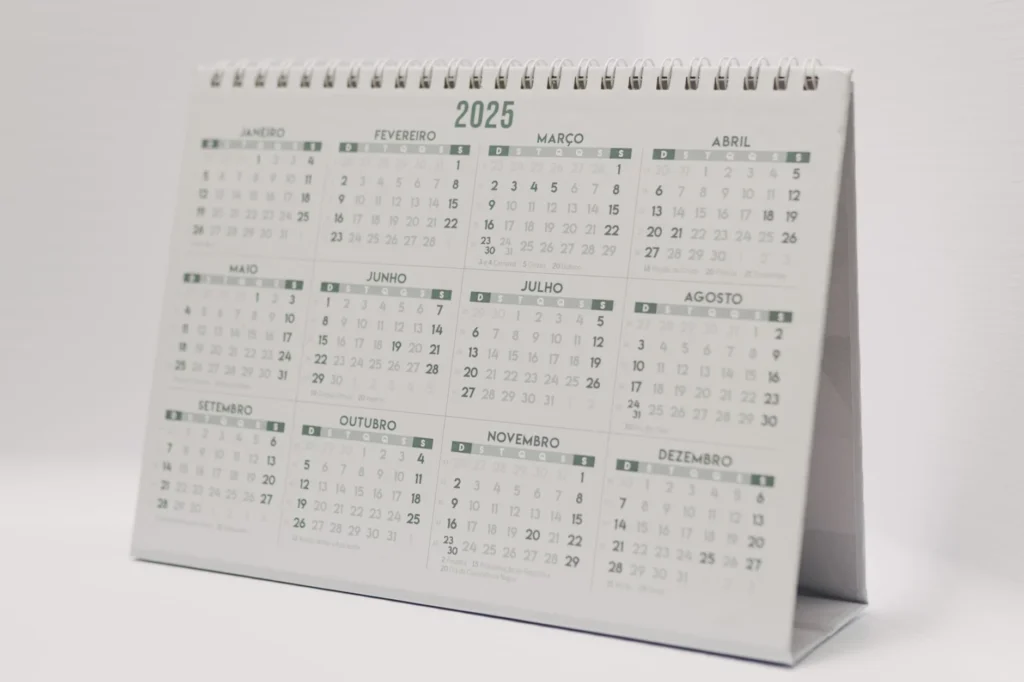
As a direct result of this change, the year 2483 BE lasted only nine months, from 1 April to 31 December 1940. This means that 1 January 1940 to 31 March 1940 fell within 2482 BE, and 1 April 1940 to 31 December 1940 fell within 2483 BE.
Practical Implications for Dates Before 1941
This matters significantly for old dates. For any date from 1 January 1941 onwards, the difference is always 543 years. However, for dates from January to March before 1941, the difference is 542 years, because those months belonged to the previous Thai year. For example:
- A document dated February 2480 BE is therefore February 1938 AD, not 1937 AD (2480 – 542 = 1938).
- A document dated May 2480 BE is May 1937 AD (2480 – 543 = 1937).
If you are researching historical documents, birth certificates, or land deeds from before 1941, pay close attention to the month to apply the correct offset. For most modern purposes, the 543-year rule is sufficient.
Where you will see Buddhist Era dates
You will encounter Buddhist Era dates frequently in Thailand. Being able to recognise and convert them is a valuable skill for residents and visitors alike.
- Official documents — Thai ID cards, birth certificates, house registration books (Tabien Baan), driving licences, and court papers consistently use BE. You will often find the Western date of birth also printed in English on Thai ID cards, providing a convenient reference.
- Newspapers, receipts, bank statements and school certificates — Most everyday printed materials, financial records, and educational documents in Thailand will display dates in BE. Always double-check expiry dates on receipts or tickets.
- Visa and immigration stamps — Thai immigration stamps may show either the BE or AD year. Always check whether the year starts with “25” (for BE) or “20” (for AD) to avoid confusion about your permitted stay duration.
- Phones and computers — Thai-language operating systems or applications often default to the Buddhist calendar. For example, your phone or an app can suddenly show the year 2569 or 2570. You can easily switch the calendar display in your device’s language and region settings if you prefer the Western calendar.
- Public signage and historical markers — Many signs, plaques, and monuments, especially those commemorating historical events or the monarchy, display dates in BE.
- Product expiry dates — As mentioned, food products and medications commonly use two-digit BE years for expiry dates. So, always assume “EXP 20/05/71” means 20 May 2571 BE (20 May 2028 AD).
Other Buddhist calendar converters in BE
Not every Buddhist country counts the same way. While Thailand’s system is widely used, it is not universal across all Buddhist nations. If you are dealing with documents or information from neighbouring countries, exercise caution.
Cambodia and Laos use a Buddhist Era. Their year count can differ from Thailand’s by one year. This depends on the season. They traditionally change the year at a different point. This often links to the lunar cycle or specific astrological events. For instance, a Buddhist Calendar Converter might show 2569 BE in Thailand. It could still be 2568 BE in Cambodia for a few months.
Sri Lanka and Myanmar use BE dates for religious occasions. Their official civil calendars are Western. Myanmar also has its own Burmese calendar. It has a different starting point and unique calculations. If you use a buddhist calendar converter for a date from these countries, always verify the calendar. Check the year count the document uses. Do not assume the Thai 543-year offset.

Thai age and birth years
Thai people count age the international way: you turn one year older on your birthday. This means the concept of age is identical to Western counting, even if the year numbers differ.
To convert a date of birth in BE, subtract 543 for the Western year. Then use an age calculator. For example, 12 August 2540 BE is 12 August 1997. They turn 30 on 12 August 2027 (2570 BE). A buddhist calendar converter helps with this. The when will I turn calculator shows future birthdays’ exact date and weekday.
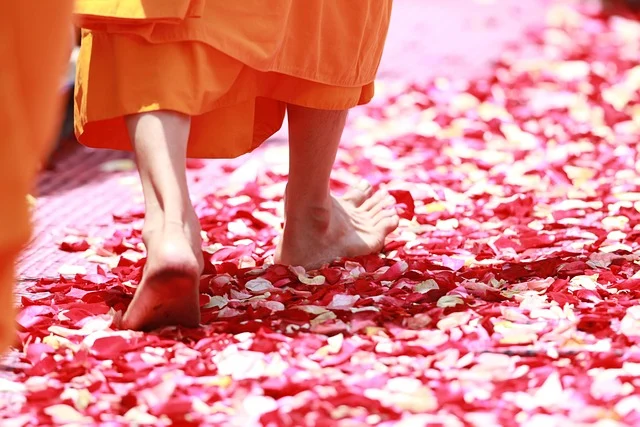
Weekdays carry special meaning in Thailand, where each day has its own colour. For example, yellow for Monday, the day King Bhumibol was born, is the best known and is often worn by people to show respect. Our what day was I born calculator can tell you your birth weekday.
Thai weekday colours
In Thailand, each day of the week has a traditional colour, linked to the Hindu god of that day’s planet. As a result, this tradition is deeply ingrained in Thai culture and influences daily life in subtle ways.
Many Thai people know their birth weekday and its associated colour. They might choose to wear the colour of the day, or even select a car or phone in their birth colour, believing it brings good luck or reflects their personality. For example, a person born on a Monday might favour yellow items.

| Day | Colour |
|---|---|
| Sunday | Red |
| Monday | Yellow |
| Tuesday | Pink |
| Wednesday | Green |
| Thursday | Orange |
| Friday | Light blue |
| Saturday | Purple |
The Thai Lunar Calendar and Buddhist Holy Days
Thailand uses the solar Gregorian calendar for civil matters. It uses BE years. However, religious events follow a Thai lunar calendar. A buddhist calendar converter helps with this. Buddhist holy days like Makha Bucha, Visakha Bucha, and Asanha Bucha depend on moon phases. Specific astrological calculations determine them. Western dates change yearly due to this. The official solar calendar does not change.
Visakha Bucha is on the full moon of the sixth lunar month. To find the Western date, use a buddhist calendar converter. This tool helps with the BE year. However, the civil solar calendar differs from the religious lunar one. This distinction is key for Thai timekeeping.
Who this advice suits (and who it doesn’t)
This advice is ideal for:
- Tourists and expatriates living in Thailand who need to understand dates on documents, products, and signs.
- Anyone conducting business with Thailand or interpreting official Thai records from 1941 onwards.
- Individuals interested in general Thai culture and history.
This advice may not fully suit:
- Historians or researchers dealing extensively with pre-1941 Thai documents, due to the nuances of the 1941 calendar change.
- Astrologers or religious scholars requiring precise lunar calendar calculations for specific Buddhist observances or events.
- Individuals interpreting documents from other Buddhist countries (e.g., Laos, Cambodia, Sri Lanka, Myanmar), as their Buddhist Era counts or calendar systems may differ.
Frequently asked questions
What year is it in Thailand?
In 2026 AD, it is 2569 BE. It becomes 2570 BE on 1 January 2027 AD.
How do I convert a Thai year to a Western year?
Subtract 543 from the Thai Buddhist Era (BE) year. For example, 2565 BE minus 543 equals 2022 AD.
Does the Thai calendar have different months or leap years?
No. Thailand’s official solar calendar uses the same 12 months, days, and leap year rules as the Gregorian calendar. Only the year number differs. However, a separate lunar calendar determines Buddhist holy days.
When is Thai New Year?
The official civil year starts on 1 January, aligning with the Gregorian calendar. However, the traditional Thai New Year, Songkran, is celebrated culturally on 13–15 April each year.
How do I read a two-digit year on a Thai product?
Assume the two-digit year refers to the current Buddhist Era century, typically 25xx BE. For example, “EXP 01/01/70” means 1 January 2570 BE (which is 1 January 2027 AD).
Sources
- Thai solar calendar: the 1940 decree and the 543-year offset
- Unicode CLDR: Calendar data used by browsers (Buddhist calendar)

Yasir Hafeez is the founder and editor of ItsAgeCalculator. He builds the calculators, writes and checks the guides and articles, and tests every result against fixed date rules. He also runs OmniMatrics, a site of everyday calculators and converters.