In this article
The usual estimate of your maximum heart rate is 220 minus your age: about 180 beats per minute at 40. A more accurate formula, from a large 2001 study, is 208 − 0.7 × age, which gives 180 at 40 as well but higher values for older people — 159 instead of 150 at 70. Both are only estimates: real maximums vary by about 10 beats either way. Start by checking your exact age.
Understanding your maximum heart rate (MHR) helps you train effectively and safely. It sets the upper limit for your heart’s beats per minute during intense physical activity. You use this number to define target heart rate zones, guiding your workouts to achieve specific fitness goals, whether it is improving endurance, burning fat, or boosting cardiovascular health.
Your exact age
Use your age in whole years in the formulas below. For example, at 47 years and 8 months, use 47. Accuracy matters when calculating your maximum heart rate and target zones, as even a small difference in age can shift your recommended training intensity.
Maximum heart rate by age chart
| Age | 220 − age | 208 − 0.7 × age | Moderate zone (50–70%) | Vigorous zone (70–85%) |
|---|---|---|---|---|
| 20 | 200 | 194 | 97–136 | 136–165 |
| 30 | 190 | 187 | 94–131 | 131–159 |
| 40 | 180 | 180 | 90–126 | 126–153 |
| 50 | 170 | 173 | 87–121 | 121–147 |
| 60 | 160 | 166 | 83–116 | 116–141 |
| 70 | 150 | 159 | 80–111 | 111–135 |
| 80 | 140 | 152 | 76–106 | 106–129 |
Zones are calculated from the 208 − 0.7 × age column and rounded. Values are beats per minute (bpm). To use this chart, find your age in the first column. Then, look across to see your estimated maximum heart rate based on two common formulas. The “Moderate zone” and “Vigorous zone” columns show the heart rate ranges you should aim for during exercise to achieve those specific intensities.
Worked example for target heart rate zones
Let’s calculate the target heart rate zones for a 45-year-old using the 208 − 0.7 × age formula.
- Calculate Maximum Heart Rate (MHR):
- MHR = 208 − (0.7 × 45)
- MHR = 208 − 31.5
- MHR = 176.5 bpm (round to 177 bpm)
- Calculate Moderate Zone (50–70% of MHR):
- Lower end: 0.50 × 177 = 88.5 bpm (round to 89 bpm)
- Upper end: 0.70 × 177 = 123.9 bpm (round to 124 bpm)
- Your moderate zone is 89–124 bpm.
- Calculate Vigorous Zone (70–85% of MHR):
- Lower end: 0.70 × 177 = 123.9 bpm (round to 124 bpm)
- Upper end: 0.85 × 177 = 150.45 bpm (round to 150 bpm)
- Your vigorous zone is 124–150 bpm.
So, a 45-year-old would aim for 89–124 bpm for moderate activity and 124–150 bpm for vigorous activity.
The two formulas
The 220 − age formula is famous in fitness. However, it lacks proper study backing. It originated from a 1971 review chart by Fox and colleagues. This chart was drawn by eye using limited data. Textbooks and gym posters popularized it. Its simplicity aided widespread adoption. Yet, it has scientific limitations. It offers a rough, quick estimate. Accuracy for maximum heart rate by age decreases significantly outside middle age.

The formula 208 − 0.7 × age estimates maximum heart rate by age. This comes from a 2001 study. Hirofumi Tanaka and colleagues published it. It appeared in the Journal of the American College of Cardiology. They combined 351 earlier studies. These involved 18,712 people. Then they tested the result. This test used 514 healthy adults. Ages ranged from 18 to 81. They performed a maximal exercise test. This formula offers a robust estimate. It is research-backed for adults.
The two formulas agree at about age 40. Below 40, 220 − age gives slightly higher values; above 40 it gives lower ones, and by 70 it underestimates the maximum by about 10 beats per minute. This underestimation for older individuals can lead to them training at a lower intensity than optimal, missing out on potential health benefits.
A separate study of over 5,000 women (Gulati and colleagues, 2010) suggested 206 − 0.88 × age for women, which gives lower values in older age — about 162 at 50 and 144 at 70. This formula acknowledges potential physiological differences in heart rate response between sexes, particularly as women age. If you are a woman, you might consider using this formula for a more personalized estimate.
Why the formulas are only a guide
Any formula gives the average for people of your age. Your own maximum can easily be 10–12 beats higher or lower, and fitness does not raise it much — it is mostly set by age and genetics. This means two people of the same age could have significantly different true maximum heart rates, impacting their ideal training zones. Relying solely on a formula without considering your individual response might lead you to under- or over-exert during workouts.

Some medicines, especially beta-blockers, lower heart rate. They make maximum heart rate by age formulas meaningless. Beta-blockers treat high blood pressure, angina, and irregular heart rhythms. If on such medication, your heart rate responds differently to exercise. Your doctor is the best resource. They determine safe, effective exercise intensities in this situation.
A lab exercise test, medically supervised, measures your true maximum. During this test, you use a treadmill or stationary bike. You connect to an electrocardiogram (ECG) and other monitors. Exercise intensity increases until maximum exertion. Medical professionals accurately record your MHR. This test also reveals cardiovascular health and fitness. It is the only way to measure maximum heart rate by age.
People with heart disease or other health conditions should ask their doctor which exercise intensity is safe for them before using heart-rate zones. Always prioritize medical advice over general fitness recommendations, especially if you have pre-existing health concerns or experience any unusual symptoms during exercise.
Target heart rate zones
The American Heart Association describes two exercise intensities in terms of maximum heart rate:

- Moderate intensity: about 50–70% of maximum — brisk walking, easy cycling. You can talk but not sing. At this intensity, you should feel your breathing and heart rate increase, but you can still maintain a conversation. This zone is excellent for improving general cardiovascular health, managing weight, and building endurance base.
- Vigorous intensity: about 70–85% of maximum — running, fast cycling, hard swimming. You can say only a few words without pausing for breath. In this zone, your heart rate and breathing are significantly elevated, making sustained conversation difficult. Vigorous activity effectively improves aerobic fitness, strengthens your heart, and enhances performance.
Health guidelines recommend 150 minutes of moderate activity. Alternatively, do 75 minutes of vigorous activity weekly. You can combine these, for example, brisk walking 30 minutes, five days a week. Running for 25 minutes, three days a week, also works. Spread activity throughout the week, do not do it in one session. Beginners should aim for the lower moderate zone. Build up intensity over weeks. Consistency matters more than immediate high intensity. This applies regardless of your maximum heart rate by age.
If a watch’s zones seem wrong, check which maximum it uses — many default to 220 − age. Adjusting the MHR setting in your device to the more accurate Tanaka or Gulati formula can provide more personalized and effective zone guidance.
How to monitor your heart rate during exercise
You have several ways to monitor your heart rate to ensure you stay within your target zones:
- Manual Pulse Check: Place two fingers on your radial artery (thumb side of your wrist) or carotid artery (side of your neck). Count the beats for 15 seconds, then multiply by four to get your beats per minute. This method is simple but requires you to pause your activity.
- Heart Rate Monitors (Chest Straps): These devices offer highly accurate, real-time heart rate data. They transmit information wirelessly to a watch or smartphone, allowing continuous monitoring during exercise without interruption.
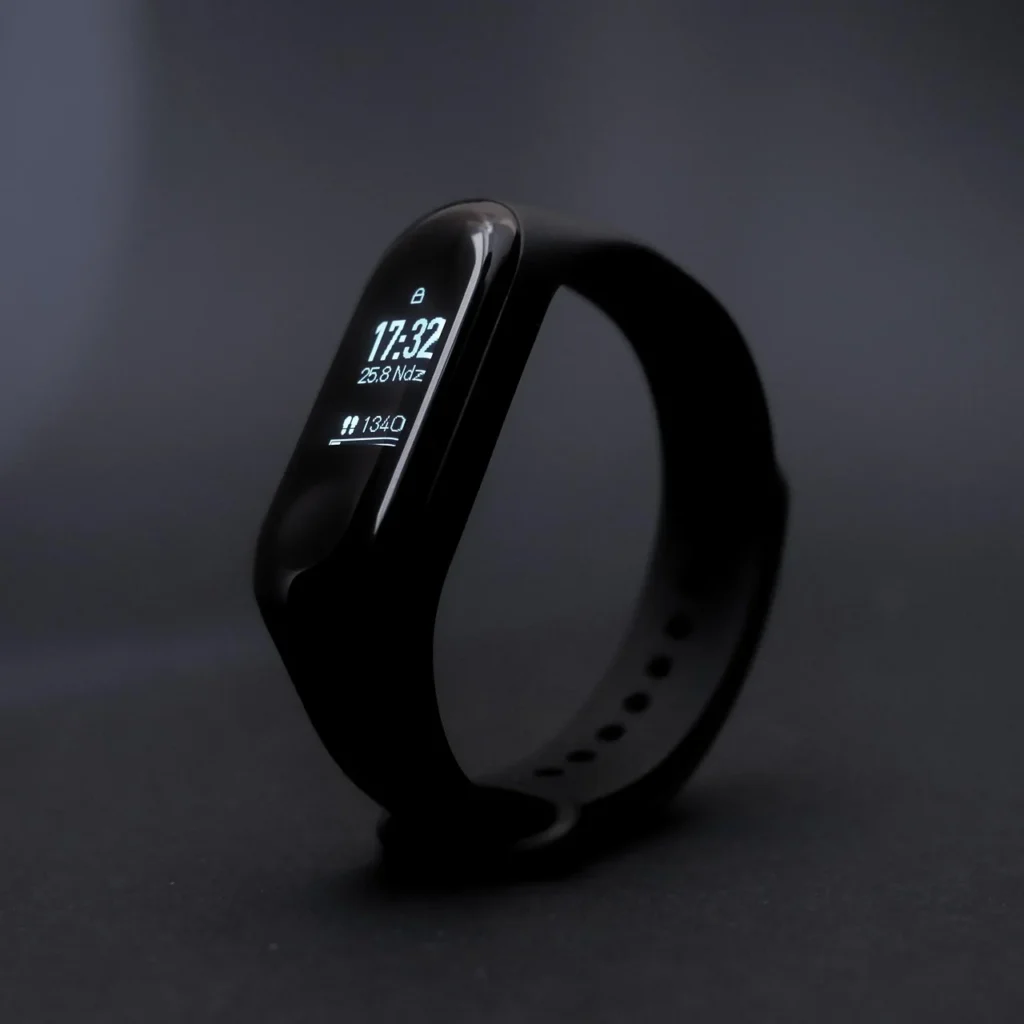
- Fitness Watches/Wearables: Many smartwatches and fitness trackers use optical sensors on your wrist to measure heart rate. While convenient, their accuracy can sometimes be affected by movement, skin tone, and device fit. They generally provide a good estimate for most activities.
Regularly checking your heart rate helps you adjust your intensity on the fly. For example, if your heart rate is too low, increase your effort. However, if it is too high, slow down to avoid overtraining or injury.
Resting heart rate
A normal resting heart rate for adults is 60–100 beats per minute. Well-trained athletes often have resting rates in the 40s or 50s, reflecting a highly efficient cardiovascular system. A lower resting heart rate generally indicates better cardiovascular fitness.

Measure it in the morning, sitting quietly. Count your pulse for 30 seconds; then double it. For accuracy, take your pulse immediately after waking. Do this before getting out of bed or consuming caffeine. Repeat for several days; average the results. This establishes your baseline. A resting rate consistently above 100 needs a doctor’s visit. A rate below 50 with dizziness or fainting also needs medical attention. These symptoms could indicate an underlying health issue. We can find your maximum heart rate by age later.
Some people use the heart-rate reserve (Karvonen) method: subtract your resting rate from your maximum, take a percentage of the difference, and add the resting rate back. It gives more personal zones for people with low resting rates. This method considers your individual fitness level more directly than simple percentage-of-MHR calculations.
Worked example for Karvonen method
Let’s use the 45-year-old from our previous example, who has an MHR of 177 bpm, and assume their resting heart rate (RHR) is 60 bpm.
- Calculate Heart Rate Reserve (HRR):
- HRR = MHR − RHR
- HRR = 177 − 60 = 117 bpm
- Calculate Moderate Zone (50–70% of HRR):
- Lower end: (0.50 × 117) + 60 = 58.5 + 60 = 118.5 bpm (round to 119 bpm)
- Upper end: (0.70 × 117) + 60 = 81.9 + 60 = 141.9 bpm (round to 142 bpm)
- Your moderate Karvonen zone is 119–142 bpm.
- Calculate Vigorous Zone (70–85% of HRR):
- Lower end: (0.70 × 117) + 60 = 81.9 + 60 = 141.9 bpm (round to 142 bpm)
- Upper end: (0.85 × 117) + 60 = 99.45 + 60 = 159.45 bpm (round to 159 bpm)
- Your vigorous Karvonen zone is 142–159 bpm.
Notice how these zones differ from the simple percentage-of-MHR method. The Karvonen method often results in slightly higher target heart rates for fitter individuals with lower resting heart rates, providing a more challenging and effective workout within their true capacity.
Children
These formulas were developed for adults. Children have higher heart rates, and their maximum is often around 200 or more. Applying adult formulas to children would significantly underestimate their capabilities and could lead to inappropriate exercise recommendations. Children do not need heart-rate targets; the WHO recommends an average of 60 minutes of moderate-to-vigorous activity a day for ages 5–17. This activity should be varied and enjoyable, focusing on developing motor skills and promoting lifelong physical activity habits, rather than strict heart rate zones.

Common problems and fixes
- Problem: My heart rate monitor shows inconsistent readings.
Fix: Ensure your heart rate monitor is properly positioned and snug. For chest straps, moisten the electrodes. For wrist-based trackers, wear it higher on your arm and tighter than a normal watch. Avoid excessive arm movement if using a wrist device. Clean the sensor regularly.
- Problem: Feeling exhausted with a low heart rate.
Fix: This could indicate overtraining, illness, or insufficient recovery. Check a resting heart rate; if it is elevated, overtraining or sickness might be present. Prioritize rest, hydration, and nutrition. Consult a doctor if symptoms persist or if feeling unwell.
- Problem: Inability to reach a target heart rate zone.
Fix: Increase the intensity or duration of the exercise. If on medication that lowers heart rate, target zones might need adjustment by a doctor. Ensure adequate rest and hydration. If new to exercise, build up gradually.
- Problem: My heart rate is consistently above my target zone.
Fix: Reduce your exercise intensity. You might be overexerting yourself, which can increase injury risk or lead to burnout. If you feel fine but your heart rate is high, you might have a higher individual MHR than the formula suggests; consider a supervised exercise test if you need precision.
Frequently asked questions
What is the maximum heart rate for a 50-year-old?
About 170 bpm with 220 − age, or 173 bpm with 208 − 0.7 × age. Individual values vary by about 10 bpm. For women, the Gulati formula (206 − 0.88 × age) suggests around 162 bpm.
What is the maximum heart rate for a 60-year-old?
About 160–166 bpm, depending on the formula. Specifically, 160 bpm with 220 − age, or 166 bpm with 208 − 0.7 × age. For women, the Gulati formula would estimate approximately 153 bpm.
Is it dangerous to reach my maximum heart rate?
Brief, hard exercise efforts are normal for healthy people. They can be beneficial for fitness. Do not sustain them for long periods. If you have a heart condition, high blood pressure, or symptoms like chest pain, dizziness, or unusual shortness of breath, stop. Ask a doctor first about your maximum heart rate by age.
Which formula is best?
208 − 0.7 × age is generally considered more accurate on average for adults, especially over 40, as it is based on extensive research. Women may prefer 206 − 0.88 × age for a more tailored estimate. Remember all formulas are estimates; individual variation is significant.
How often should I check my heart rate zones?
Your maximum heart rate decreases with age, so re-calculate your zones annually or whenever your age changes. If you significantly improve your fitness, you might also consider using the Karvonen (heart rate reserve) method for more personalized zones, as your resting heart rate may decrease.
Sources
- Tanaka, Monahan and Seals (2001): Age-predicted maximal heart rate revisited, J Am Coll Cardiol
- American Heart Association: Target heart rates
- WHO: Physical activity fact sheet
- Gulati et al. (2010): The Women’s Ischemia Syndrome Evaluation (WISE) Study: A New Equation for Estimating Maximum Heart Rate in Women, Circulation

Yasir Hafeez is the founder and editor of ItsAgeCalculator. He builds the calculators, writes and checks the guides and articles, and tests every result against fixed date rules. He also runs OmniMatrics, a site of everyday calculators and converters.